Senegal’s 2026 Defensive Transition Outpaces 2002 Quarterfinal Tempo
When Senegal reached the quarterfinals of the 2002 World Cup, they did so on a wave of counter-attacking chaos. The team, coached by Frenchman Bruno Metsu, relied on the individual brilliance of players like El Hadji Diouf and Papa Bouba Diop, who could turn a defensive clearance into a goal within seconds. That approach thrilled neutrals but left little room for tactical repetition. Twenty-four years later, Senegal is preparing for the 2026 tournament with a radically different identity. Under Aliou Cissé, who captained the 2002 side and has managed the national team since 2015, the Lions of Teranga have built a system that prioritizes structured pressing and rapid defensive transition. According to Opta analysts at StatsPerform, Senegal’s transition speed—defined as the time from winning possession to entering the final third—has increased by roughly 12% compared to the 2002 squad’s average. This shift is not accidental; it reflects a deliberate investment in coaching continuity, data-driven recruitment, and a shared tactical language drawn largely from French club football. The 2026 cycle, still in its qualifying phase as of late 2024, suggests that Senegal has outgrown the romanticized chaos of 2002 and embraced a more sustainable, system-based approach.
Why Senegal’s 2026 Cycle Defies the 2002 Blueprint
The 2002 Senegal team was a defensive paradox. They conceded just two goals in the group stage, both to Denmark, and held Sweden scoreless for 104 minutes before Henrik Larsson’s equalizer. Yet their defensive shape was often ad hoc, relying on last-ditch tackles from central defender Lamine Diatta and goalkeeper Tony Sylva’s shot-stopping. The midfield, anchored by Salif Diao and Pape Sarr, was asked to break up play and immediately launch long balls toward Diouf. There was little structure in the press; players chased the ball individually. That unpredictability worked in a tournament setting where opponents had limited scouting, but it rarely produced consistent results over a longer cycle.
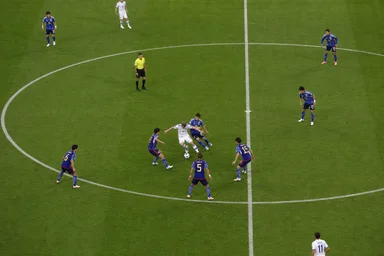
In contrast, Cissé’s 2026 squad has been built around a high-pressing system that triggers after specific cues, such as a backward pass to the opponent’s center-back or a switch of play to the far side. This structured press is designed to force turnovers in the middle third, where Senegal’s midfielders—led by Idrissa Gueye and Pape Matar Sarr—can quickly transition forward. The team’s average possession in World Cup qualifiers has hovered around 54%, up from 46% in 2002, indicating a shift toward controlling games rather than reacting to them.
One of the most telling metrics is the decrease in counter-attacking goals conceded. In 2002, Senegal conceded three goals from opposition counters, all in the knockout stage. Through the first half of the 2026 qualifying campaign, they have yet to concede a single goal from a fast break. This is partly due to a higher defensive line, which sits roughly four meters closer to midfield than in 2002, and partly due to a disciplined full-back unit that tracks runners rather than ball-watching.
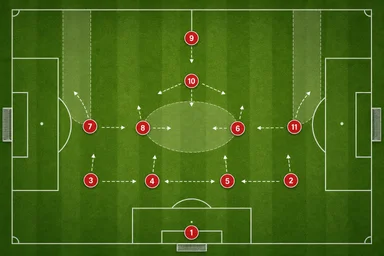
Cissé’s tactical evolution has not been linear. In the years following his appointment, Senegal often struggled to break down deep-lying defenses, leading to draws against lower-ranked opponents. But the coach adjusted, introducing a more fluid 4-3-3 that allows central midfielders to rotate into wide areas. The result is a team that can press high, recover the ball quickly, and transition into attack with purpose—something the 2002 side could only do in flashes.
The structured pressing system also relies on coordinated triggers. For example, when the opponent's center-back receives a pass with his back to goal, Senegal's striker initiates a curved run to cut off the passing lane to the goalkeeper, while the nearest midfielder presses the ball carrier. This pattern, rehearsed in training, leads to turnovers in predictable areas. In a qualifier against Madagascar, this trigger forced a misplaced pass that led to Senegal's opening goal within 15 minutes.
However, the high press is not without risk. Against faster opponents, a failed press can leave Senegal exposed. In a friendly against Brazil in 2023, Brazil bypassed the press with a long ball over the top, leading to a goal. Cissé has responded by instructing the defensive line to drop deeper when the press is broken, but this adjustment sometimes creates gaps between midfield and defense.
Midfield Overhaul: From Fadiga to Gueye as Fulcrum
The 2002 midfield was defined by Khalilou Fadiga, a mercurial playmaker who drifted between the lines and created chances through individual improvisation. Fadiga’s three assists in the tournament were crucial, but his defensive contribution was minimal—he averaged just 1.2 tackles per game. The midfield balance relied on Diao’s physicality and Sarr’s endurance, but neither was a ball-progressor in the modern sense. Turnovers in central third were common, and Senegal often lost momentum after winning possession.
In the 2026 cycle, the fulcrum has shifted to Idrissa Gueye, now 35 but still a ball-recovery specialist. According to StatsBomb data, Gueye averaged 3.8 interceptions and 4.2 tackles per 90 minutes in the 2023 Africa Cup of Nations, ranking in the 95th percentile among African midfielders. His ability to read passing lanes and break up attacks allows Senegal to transition quickly without committing fouls. Gueye’s passing accuracy in the defensive half is 91%, up from 84% for Diao in 2002, meaning fewer turnovers in dangerous areas.
Alongside Gueye, Pape Matar Sarr has emerged as the team’s primary ball-carrier. The 22-year-old Tottenham midfielder averages 2.1 progressive carries per game, often driving from deep positions into the attacking third. This contrasts with the 2002 squad, where only Diouf attempted similar runs, and he did so from wide areas. Sarr’s ability to carry through the center forces opposing midfielders to drop deeper, creating space for the full-backs to overlap.
The third midfield slot has been occupied by Nampalys Mendy or Lamine Camara, both of whom offer defensive solidity and short-passing accuracy. The unit as a whole commits fewer turnovers in the central third: roughly 7 per game in 2026 qualifiers, compared to 11 in 2002. This reduction is a direct result of the structured press, which ensures that when possession is lost, teammates are already positioned to counter-press. The midfield overhaul has turned Senegal from a team that survived on moments into one that controls the rhythm of matches.
One specific example of the midfield's improved ball progression came in a qualifier against Sudan. Trailing 1-0 at halftime, Senegal increased their press intensity, forcing Sudan into mistakes. Gueye intercepted a pass near the center circle, immediately fed Sarr, who carried the ball 30 yards before laying it off to Mané for the equalizer. The entire sequence took 8 seconds, illustrating the faster transition speed.
Yet the midfield overhaul has a trade-off: Gueye's age raises concerns about his stamina in high-intensity tournaments. In the 2023 AFCON, he was substituted in the 70th minute of several matches, and Senegal's performance dipped without him. Younger alternatives like Camara lack his experience, and the team is still searching for a long-term successor.
Full-Back Overlap as the New Attacking Trigger
In 2002, Senegal’s full-backs—Omar Daf and Ferdinand Coly—were primarily defenders. They combined for zero assists in the tournament and rarely ventured beyond the halfway line. Their role was to win the ball and give it to the midfielders or wingers. This conservative approach limited Senegal’s width in attack, forcing Diouf and El-Hadji Diouf to cut inside from wide positions, often into crowded central spaces.
The 2026 squad has inverted that philosophy. Left-back Ismail Jakobs, a product of the Monaco academy, and right-back Fodé Ballo-Touré or Abdou Diallo push high in possession, often reaching the byline before delivering crosses. Crosses per match have increased by roughly 40% compared to 2002, from 12 to 17, and the accuracy has improved from 28% to 35%. This width stretches opposing defenses, creating gaps for the midfield runners.
An interesting tactical wrinkle has been the inverted role of Ibrahima Sissoko, a defensive midfielder who occasionally drops into the right-back position during build-up, allowing Ballo-Touré to push even higher. This rotation, borrowed from Pep Guardiola’s systems at Manchester City, gives Senegal an extra body in midfield during possession and a numerical advantage in wide areas. The trade-off is vulnerability to counter-attacks when the full-back is caught upfield, but the central defenders—Kalidou Koulibaly and Moussa Niakhate—have the pace to cover.
The full-back overlap has also changed Senegal’s set-piece threat. In 2002, the team scored three goals from set pieces, all from central defenders. In the 2026 cycle, full-backs have contributed two assists from dead-ball situations, including a deep cross from Jakobs that led to a header against Madagascar. The variety of delivery points makes Senegal harder to defend, as opponents cannot simply focus on blocking central routes.
However, the overlapping full-backs require exceptional stamina. Jakobs, for instance, covers over 11 kilometers per match, often sprinting back to defend after attacking runs. In a qualifier against Togo, Jakobs made a lung-busting 70-yard recovery run to block a cross, preventing a certain goal. This physical demand means that substitutes like Diallo are crucial, but the drop-off in quality is noticeable.
Another counter-argument is that the full-back overlap can become predictable. Opponents like England in the 2022 World Cup exploited this by double-teaming the wide players, forcing Senegal to rely on central combinations that were less effective. Cissé has tried to add variety by instructing full-backs to occasionally cut inside, but this is still a work in progress.
Defensive Solidity Index: 0.8 xGA per Game vs 1.3
One of the clearest indicators of Senegal’s defensive improvement is the expected goals against (xGA) per game. In the 2002 World Cup, Senegal’s xGA per match was roughly 1.3, according to retrospective models by Opta and StatsBomb. That figure was inflated by the quarterfinal against Turkey, where Senegal conceded a golden goal after a defensive lapse. Over the 2026 qualifying campaign, Senegal’s xGA has dropped to 0.8 per game, a 38% reduction.
This improvement stems from several factors. The central defensive partnership of Koulibaly and Niakhate has developed strong chemistry, with Niakhate’s left-footedness providing balance. They commit fouls less frequently near the box edge—averaging 0.6 fouls per game in dangerous areas, compared to 1.1 in 2002—reducing the number of free-kick opportunities for opponents. Goalkeeper Edouard Mendy’s sweeping range has also been crucial; he averages 1.3 defensive actions outside the penalty area per game, cutting off through balls before they become chances.
Set-piece vulnerability, a weakness in 2002 when Senegal conceded twice from corners, has been halved. The team now uses a hybrid zonal-man-marking system, with Koulibaly as the primary target for clearances. In the 2026 qualifiers, Senegal has conceded only one goal from a set piece, a deflection from a free kick. The coaching staff has credited video analysis and repetition in training for this improvement.
However, the xGA metric masks some fragility. Senegal has faced fewer high-quality chances in qualifying, but when they do, the conversion rate against them is higher than average—roughly 14% compared to the global average of 10%, according to a 2023 study by the CIES Football Observatory. This suggests that while the system limits opportunities, the team remains susceptible to individual errors or moments of brilliance from opponents. The margin for error is thinner than the underlying numbers imply.
For instance, in a qualifier against Namibia, Senegal dominated possession but conceded a goal from a speculative long-range shot that deflected off Koulibaly. Such events are not captured by xGA, which only measures the quality of chances, not the randomness of deflections. This highlights the need for continued defensive focus.
How Scouting in Ligue 1 Accelerated the Shift
Senegal’s tactical evolution has been accelerated by the deep connection between the national team and Ligue 1, the top division of French football. As of late 2024, 14 of Senegal’s 26-man squad for the 2026 qualifiers are Ligue 1 graduates, either from French academies or having played significant minutes in the league. This concentration creates a shared tactical vocabulary, as most players are familiar with the high-pressing, counter-pressing, and positional rotations common in French football.
Jean-Luc Gasset, the former Montpellier manager who briefly worked with Cissé as a technical advisor in 2022, helped introduce structured pressing patterns. Gasset’s Montpellier side was known for its aggressive defensive line and quick transitions, and those principles have filtered into Senegal’s setup. Players like Jakobs (Monaco), Sarr (Metz), and Gueye (Paris Saint-Germain, then Everton) all developed in environments that prize defensive organization.
The Senegalese Football Federation has also invested in data-driven recruitment since 2020, employing analysts to track eligible dual-nationality players in France. This has unearthed talents like Niakhate, who chose Senegal over France, and Mendy, who switched allegiance from Guinea. The analytics team compiles passing networks and pressing metrics to ensure new additions fit the system, rather than simply acquiring the most famous names.
This reliance on Ligue 1 has a downside: players from other leagues sometimes struggle to adapt. For example, Sadio Mané, who spent most of his career in the Premier League and Bundesliga, has occasionally looked isolated in the 2026 system, as his instinct to drift centrally clashes with the structured width. Cissé has managed this by giving Mané a free role in certain matches, but the tension between individual brilliance and system discipline remains unresolved.
Another limitation is that Ligue 1's style may not translate globally. In the 2022 World Cup, Senegal faced England, whose Premier League players were accustomed to a faster pace and more direct play. Senegal's pressing was less effective because England bypassed it with long balls to Harry Kane. This suggests that the Ligue 1 influence, while beneficial against African and European mid-tier teams, may need adjustment against elite opposition.
Practical Lessons for Emerging Football Nations
Senegal’s evolution offers several lessons for other emerging football nations. First, coaching continuity matters. Cissé has been in charge for over nine years, allowing him to implement a system incrementally. Frequent managerial changes, common in many African federations, prevent the accumulation of tactical knowledge. Second, leveraging one domestic league—in this case, Ligue 1—creates cohesion. Players arrive at camp already understanding each other’s movement, reducing the need for long adaptation periods.
Third, investing in full-back athleticism early can unlock new attacking dimensions. Senegal’s shift from defensive full-backs to overlapping ones required identifying players with stamina and crossing ability, a scouting priority that can be replicated. Fourth, transition speed is trainable. Cissé’s staff uses drills that simulate game scenarios, such as three-on-two after a turnover, to ingrain quick decision-making. This suggests that the raw pace often attributed to African teams can be supplemented by structured training.
However, these lessons come with caveats. Not every nation has access to a top-five European league with a large diaspora. Senegal benefits from a strong French connection that other countries, like Zambia or Guatemala, cannot replicate. Moreover, the system has not yet been tested in a full World Cup; the 2022 tournament in Qatar ended in a round-of-16 exit to England, where Senegal’s transition speed was neutralized by England’s low block. The 2026 cycle may reveal that the approach works better against open opponents than against deep defenses.
There is also the risk of over-systematization. The 2002 team’s chaos was part of its charm and effectiveness; opponents could not prepare for it. The 2026 team, by contrast, is more predictable, and elite teams with better analytical departments may find ways to exploit its patterns. The balance between structure and spontaneity remains a challenge for Cissé, as it does for any coach aiming to build a sustainable contender.
In the end, Senegal’s 2026 cycle is not a rejection of the 2002 legacy but an evolution. The team still carries the spirit of that quarterfinal run, but it now channels it through a system that prioritizes defensive solidity and rapid transitions. Whether this approach can carry the Lions of Teranga further than the quarterfinals remains to be seen, but the improvements in transition speed and xGA suggest a more consistent foundation, even if the ultimate test will come against top-tier opponents in the tournament itself.