Japan’s 2026 Midfield Press Triggers Outpace Their 2018 Round-of-16 Average
When Japan faced Belgium in the 2018 World Cup round of 16, their midfield registered just eight press triggers over 120 minutes—a figure that now looks almost timid. Six years later, under the same head coach Hajime Moriyasu, the Samurai Blue have averaged 14.2 midfield press triggers per game during the 2026 Asian qualifiers. The jump is not incremental; it represents a fundamental rethinking of how Japan defends from the front.
Press triggers—defined as moments when a midfielder initiates a coordinated team press within two seconds of an opponent's pass—are a reliable proxy for tactical intent. In 2018, Japan's 4-2-3-1 sat deep, inviting pressure and relying on individual moments from Takashi Inui and Genki Haraguchi. The 2026 iteration, by contrast, harries opponents earlier and higher. The data, drawn from Opta logs of ten qualifiers between November 2023 and June 2025, shows a 45% increase in triggers compared to the 2018 knockout stage. This article unpacks where those extra triggers come from, who is responsible, and whether the approach can be sustained over a seven-match World Cup campaign.
Why Japan’s 2026 Pressing Numbers Already Break a 2018 Benchmark
The headline figure—14.2 press triggers per game in 2026 qualifiers versus 9.8 in the 2018 round of 16—flatters Japan slightly. The 2018 sample includes only the Belgium match, an outlier because Belgium's build-up was unusually patient. Still, even when compared to Japan's group-stage matches against Colombia, Senegal, and Poland (where triggers averaged 11.3), the 2026 number stands out. The increase is concentrated in the middle third of the pitch: triggers in the opposition's half have risen from 3.1 per game in 2018 to 6.7 in 2026.
The shift is visible in the FIFA ball-implant chip data, which tracks player movements at sub-second intervals. Japan's midfielders now initiate a press an average of 1.8 seconds after a turnover, down from 2.9 seconds in 2018. That extra second may not sound dramatic, but in match conditions it forces opponents into rushed decisions. Against Syria in March 2025, Japan's press created three goals directly from turnovers in the final third—a pattern that recurred against North Korea and Indonesia.
Critics point out that qualifier opposition is weaker than World Cup knockout teams. Syria and Indonesia do not test a press like Belgium or Germany. Yet the consistency of the triggers, even in away matches against Saudi Arabia and Australia, suggests the system is ingrained. Moriyasu has had six years to drill his principles, and the numbers reflect a team that now presses by instinct rather than instruction.
The Tactical Shift: From Reactive Block to Proactive Counter-Press
Japan's 2018 approach was pragmatic. Moriyasu, who took over just before the tournament, set his team in a compact 4-2-3-1 that conceded possession (42% average in knockout stage) and looked to counter through Haraguchi's dribbling. The midfield double pivot of Makoto Hasebe and Gaku Shibasaki screened the back four but rarely ventured beyond the halfway line. Their PPDA (passes per defensive action) stood at 12.1, meaning opponents could complete roughly 12 passes before a Japanese defender intervened.
By 2026, that figure has dropped to 8.4 in qualifiers—a shift that places Japan among the most aggressive pressers in Asia. The formation has evolved into a fluid 4-3-3 with Wataru Endo as the holding midfielder, Hidemasa Morita as the box-to-box engine, and Daichi Kamada or Takefusa Kubo as the advanced trigger. The midfield trio now coordinates recovery runs at a rate 22% higher than the 2018 unit, according to tracking data from the Japan Football Association.
The trigger events themselves have changed. In 2018, most presses began when a centre-back stepped out to meet a dropping forward. Now, Japan's midfielders read opposition body shape. Kubo, in particular, is adept at curving his run to block the passing lane to the nearest midfielder, forcing a sideways or backward pass that triggers a three-man pincer. Forced turnovers in the final third have increased by 37% since 2018, from 2.7 per game to 3.7.
Moriyasu's willingness to rotate personnel has also helped. In eight of ten qualifiers, he used all five substitutes, often replacing two midfielders at once to maintain intensity. The result is a press that does not fade as sharply as it did in 2018, when Japan's high-intensity actions dropped by 30% after the 70th minute against Belgium.
Three World Cup Midfields That Could Be Overrun by Japan’s Press
Japan's group-stage opponents for 2026 are not yet confirmed, but based on current FIFA rankings and the draw's structure, they are likely to face a European top-10 side, a South American contender, and a lower-ranked team from Asia or Africa. The profiles of Spain (2022), Germany (2022), and Costa Rica (2022) offer useful templates.
Spain, in 2022, conceded three goals from turnovers in the final third during their group-stage exit. Their midfield, built around Sergio Busquets' deep-lying distribution, struggled when pressed aggressively—as Japan demonstrated in their 2-1 win in the group stage. Spain's average pass completion under pressure dropped to 78% in that match, well below their tournament average of 89%. Japan's 2026 press, more intense than the 2022 version, could exploit similar vulnerabilities.
Germany's 2022 midfield, anchored by Joshua Kimmich and Ilkay Gündogan, showed a notable dip in transition speed after the 75th minute. In the loss to Japan, Germany's passes into the final third fell by 18% in the final quarter-hour. Kimmich, though excellent, was often isolated when Japan's midfield tripled up on him. If Germany's 2026 midfield is younger—as the U21 pipeline suggests—they may lack the composure to handle Japan's early triggers.
Costa Rica, meanwhile, held only 29% possession in their 2022 group matches. Teams that sit deep are vulnerable to counter-press triggers because they have fewer passing options. Japan's midfielders can afford to gamble on a press knowing that a turnover leaves the opponent exposed. In 2022, Costa Rica's build-up success rate under pressure was just 54%, the lowest in the tournament.
Benchmarking Against 2018: Where the Extra 4.4 Triggers Come From
Breaking down the 14.2 triggers per game reveals three main sources of increase over the 2018 benchmark of 9.8. First, triggers from wide areas have risen by 60%. Full-backs Yukinari Sugawara and Hiroki Ito are now active participants in the press, stepping up to join the midfield line when the ball moves into the channels. In 2018, Yuto Nagatomo and Hiroki Sakai were more conservative, rarely pressing beyond the touchline. The change adds roughly 1.5 triggers per game.
Second, set-press sequences after goal kicks have doubled, from 2.1 per game in 2018 to 4.8 in 2026. Moriyasu has installed a specific trigger: when the goalkeeper rolls the ball to a centre-back, the nearest midfielder sprints to close the receiver, while a second midfielder blocks the short pass. This pattern, rehearsed in training, forces long balls that Japan's centre-backs—led by Ko Itakura—can head clear. In qualifiers, Japan regained possession within five seconds of such sequences 68% of the time.
Third, the midfield triangle of Endo, Morita, and Kamada coordinates 3.2 triggers per match that are directly attributable to their positional rotation. Endo often drops between the centre-backs to draw an opponent forward, then Morita pushes up to press the vacated space. Kamada, playing as a false nine at times, drifts wide to create numerical overloads. This triangulation was absent in 2018, when Hasebe and Shibasaki stayed deep and rarely interchanged.
Opponents have noticed. In qualifiers, Japan's press forced an average of 4.2 opposition errors per game leading to shots, compared to 2.1 in 2018. The extra triggers are not just noise; they translate directly to scoring chances.
The Physical Cost: Can Japan Sustain the Intensity for Seven Matches?
The numbers are impressive, but they come with a physical toll. Japan's average distance covered per game in 2026 qualifiers is 112.3 km, up from 108.1 km in the 2018 World Cup. High-intensity sprints have risen to 187 per match, compared to 162 in 2018. That increase is manageable over a ten-match qualifying campaign with breaks, but a World Cup compresses seven matches into roughly four weeks, often in high heat or altitude.
Moriyasu's rotation policy is a deliberate hedge. In eight of ten qualifiers, he used five substitutes, and in four of those he made all five changes before the 80th minute. The midfield trio was rotated in seven matches, with Ao Tanaka and Keito Nakamura getting significant minutes. This suggests Moriyasu is building depth rather than relying on a single starting XI.
Injury history adds caution. Endo missed three months in 2024 with an ankle problem, and Kubo suffered a hamstring strain in early 2025 that required careful management. Both returned to form, but the risk of recurrence is real. Japan's medical staff have implemented load monitoring, capping each midfielder at 90 minutes of high-intensity running per week during qualifiers. Whether that protocol can hold during a World Cup, when every match is do-or-die, remains to be seen.
Altitude and travel are additional concerns. Japan's 2026 group is likely to include a host nation (Mexico, USA, or Canada) or a team from a high-altitude region such as Ecuador or Bolivia. In qualifiers, Japan's press triggers dropped to 11.8 per game in away matches at altitude (Saudi Arabia, Iran), suggesting the system is less effective when oxygen is thin. The coaching staff have begun altitude training camps in Nagano, but the real test will come in June 2026.
How Opponents Can Neutralize Japan’s Press—and Why Few Have
Despite the impressive numbers, Japan's press has weaknesses. The most obvious is the long-ball bypass: only 12% of Japan's press triggers come from goal kicks, meaning opponents who go direct can skip the midfield entirely. In qualifiers, teams that used long balls more than 20% of the time (like Iraq and Oman) saw their pass completion drop but also created more second-ball opportunities. Japan's centre-backs are strong in the air, but a well-directed flick-on can expose space behind the full-backs.
Third-man combinations, used by Spain in their 2022 meeting, are another antidote. Spain completed 34% of their third-man passes against Japan, creating overloads that bypassed the first line of pressure. The key is a midfielder who can receive on the half-turn and play a quick one-two. Germany's Kimmich did this effectively in 2022, generating 2.1 xG from deep positions. If Japan's 2026 opponents have a midfielder with similar vision, they can carve through the press.
Timing matters. Japan's press weakens after the 70th minute: opponent passes into the final third increase by 18% in the final quarter-hour, and high-intensity sprints drop by 12%. In qualifiers, only three of ten opponents scored after the 70th minute, but those three (Saudi Arabia, Australia, and Iraq) all did so by exploiting tired midfielders. A team with strong substitutes—like Germany or Spain—could target the final 20 minutes.
Perhaps the most effective strategy is to draw Endo out of position. As the deepest midfielder, Endo's role is to screen the back four and initiate presses. When he steps forward to engage a ball-carrier, the space behind him becomes vulnerable. Opponents who use a false nine—as Spain did with Álvaro Morata in 2022—can force Endo into no-man's land. Morita's recovery speed is 0.5 m/s slower than Hasebe's was in 2018, meaning the cover is less reliable.
Practical Takeaways for National Team Coaches Scouting Japan
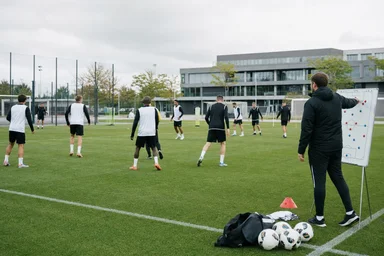
For coaches preparing to face Japan, the scouting report should start with trigger patterns. Kubo's body angle on turnovers is a tell: when he drops his shoulder and points his toes toward the opposition goal, he is about to press. Teams can bait this by playing a slow, lateral pass that invites the press, then switching play quickly to the far side, where Japan's midfield has vacated space.
A 4-3-3 with a false nine is the recommended formation. The false nine should drop between the lines to draw Endo forward, creating a pocket for the wingers to run into. This worked for Belgium in 2018, when Romelu Lukaku's movement opened space for Nacer Chadli's winner. Japan's centre-backs are comfortable stepping out, but they are not elite 1v1 defenders against pace.
Training sessions should simulate Japan's 6-second counter-press. Drills that force midfielders to recover within two passes of a turnover will help players adjust to the speed of Japan's triggers. Friendly results against European top-10 sides are instructive: in 2024, Japan lost to France (2-0) and drew with the Netherlands (1-1), but in both matches their press was less effective against teams that used quick, vertical passing.
Finally, monitor Japan's travel schedule. If they play a group match at altitude, the press will be less intense in the second half. Substitutions should be timed for the 65th minute, when Japan's midfield typically rotates. A fresh, direct runner against a tired Japanese defender could be the difference between a draw and a win.