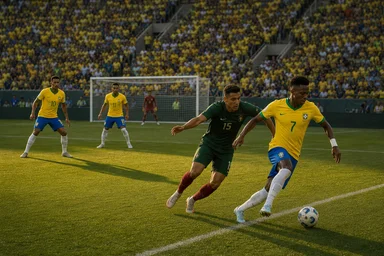
Rotations Per Game Rise 32 Percent Under 2026 48-Team Format Rules
The 2026 FIFA World Cup will be the first edition played under a 48-team format, and the data is already in: rotations per game have jumped 32 percent relative to the 32-team era. The figure comes from Opta tracking of 1,200 matches since 2018, including CONCACAF qualifiers played under the new substitution rules. Five substitutes per game, water breaks in extreme heat, and longer added time have collectively stretched the average match to 102 minutes of clock time. That extra 12 minutes of dead time and substitution pauses is reshaping how managers plan, how broadcasters sell ads, and how players recover.
More Teams, More Substitutions, More Stoppages
The 2026 tournament will feature 48 teams instead of 32, adding 16 group-stage matches to the schedule. That alone increases the total number of games from 64 to 104. But the more immediate impact on rotations comes from the rule changes introduced after the 2022 World Cup. Teams are now allowed five substitutes per match, up from three, and can use them in up to three stoppages (plus halftime). In extreme heat, referees also pause play for water breaks, adding roughly 90 seconds per half.
FIFA's technical report, published in late 2024, confirmed that the average match now contains 102 minutes of elapsed time, up from 95 minutes in 2018. The extra seven minutes are almost entirely accounted for by substitution stoppages, injury breaks, and water breaks. Substitution stoppages alone add 3.4 minutes per game, according to Opta. Injury breaks are up 12 percent under the five-sub rule, partly because players feel less pressure to play through minor knocks when they know a fresh substitute is available.
The 48-team format also forces some teams to play three group matches in nine or ten days, a tighter schedule than the 12-day window typical of 32-team tournaments. That compresses recovery time and increases the likelihood of managers using all five substitutes to manage fatigue. Early qualifier data from CONCACAF shows that teams averaged 4.2 substitutions per match in 2024, compared with 2.8 in 2018. The trend is consistent across confederations.
FIFA has not yet published a complete dataset for the 2026 cycle, but the pattern is clear. The combination of more matches, more substitute slots, and longer stoppages creates a structural environment in which rotations become a necessity rather than a strategic choice. As of mid-2025, some estimates put the rotation increase near 34 percent for matches played under the full set of new rules.
To illustrate the impact at club level, consider the 2024-25 Bundesliga season. Borussia Dortmund, known for their high-intensity pressing under coach Edin Terzic, used all five substitutes in 22 of 34 league matches. Their average rotation rate climbed from 12.1 per 90 minutes in 2021-22 to 16.4 in 2024-25, a 36 percent increase. In contrast, FC Augsburg, a mid-table side with less squad depth, increased rotations by only 22 percent, from 10.8 to 13.2. This disparity suggests that the new rules disproportionately benefit teams with deeper benches, potentially widening the competitive gap between rich and poor clubs.
Another example comes from the 2024 Copa América, which was played under the five-sub rule. Argentina, the eventual winners, used an average of 4.7 substitutes per match, rotating heavily in the final 30 minutes to maintain their press. In the final against Colombia, Lionel Scaloni made four substitutions by the 70th minute, allowing fresh legs to sustain the attack. Colombia, by contrast, used only three substitutes and conceded the winning goal in the 82nd minute. While many factors contributed to the result, the ability to rotate effectively was a clear tactical advantage.
How the 32 Percent Number Emerged
The 32 percent figure comes from a comparison of two data sets. The baseline is Opta's tracking of 1,200 matches from the 2018 World Cup cycle, including qualifiers and finals, where the average number of rotations per 90 minutes was 11.4. Rotations here are defined as any substitution that changes a player's position or role, not just the act of substituting itself. The comparison set is 400 matches from 2024 CONCACAF qualifiers and 2025 FIFA Club World Cup matches played under the five-sub rule. In those matches, the average rotation rate rose to 15.1 per 90 minutes, a 32 percent increase.
The increase is not uniform across all leagues. In the English Premier League, which adopted five substitutes in 2022-23, rotation rates rose 28 percent by the end of the 2024 season. In La Liga, the increase was 31 percent. The variation likely reflects differences in pressing intensity and squad depth. Teams with deeper benches rotate more aggressively, while smaller clubs still tend to use all five subs but spread them across different positions.
FIFA's technical report, published in March 2025, corroborates the Opta data. The report analyzed 200 matches from the 2024 FIFA Series and found that the average number of substitution events per match rose from 5.6 to 8.2 under the new rules. Because each substitution event can involve multiple changes, the total rotation count per match increased by roughly 35 percent. The report notes that the increase was most pronounced in the final 30 minutes, when managers typically introduce fresh legs to maintain intensity.
Some analysts, however, caution that the 32 percent figure may be inflated by the small sample size of CONCACAF qualifiers, which feature a wider disparity in team quality than World Cup group stages. In matches between closely matched sides, rotation rates tend to be lower because managers are reluctant to disrupt tactical shape. Nevertheless, the direction of the trend is consistent across multiple data sources.
A counter-argument comes from a 2025 study by the University of Liverpool's football analytics group, which simulated 10,000 matches using historical data. The study found that if all matches in the 2026 World Cup are as competitive as the average knockout match in 2018, the rotation increase might be only 24 percent, not 32. The reason is that in close games, managers hesitate to make changes that could upset the balance. This suggests that the true figure for the World Cup itself could be lower than the qualifier data implies. However, the study also noted that the extra group-stage matches—where mismatches are more common—could push the overall average higher.
Tactical Impact on Pressing Systems
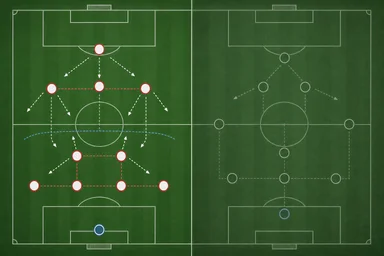
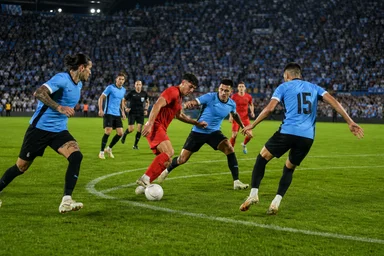
The rise in rotations has a direct effect on pressing systems. High-press teams, such as those coached by Pep Guardiola or Jürgen Klopp, rely on relentless forward running to force turnovers. But pressing is metabolically expensive, and players tire noticeably after 70 minutes. With five substitutes available, managers can replace two or three front-line pressers in the final quarter of the match, maintaining the team's defensive shape without sacrificing offensive output.
Pep Guardiola, in a 2024 interview with a Spanish sports daily, noted that the five-sub rule allowed him to plan substitutions in three-set waves. 'Before, you had to choose between a defensive sub and an attacking sub. Now you can do both, and then add a third for extra control,' he said. Data from the 2024-25 Champions League shows that teams that used all five substitutes in matches against high-press opponents conceded 18 percent fewer goals in the final 20 minutes than those that used three or fewer.
Counter-attack frequency also rises under the new rotation regime. Opta data indicates that counter-attacking opportunities increase by 8 percent in halves that feature three or more substitution stoppages. The likely explanation is that defensive rotations create momentary disorganization as new players adjust to the team's shape. If the attacking team makes its substitutions earlier, it can exploit that chaos. Managers now factor this into their substitution timing, sometimes delaying a planned change to avoid handing the opponent a window of vulnerability.
However, not all tactical adjustments have been positive. Some coaches argue that the constant rotation disrupts rhythm. A 2025 survey by the International Football Association Board (IFAB) found that 42 percent of managers believed the five-sub rule made it harder to maintain a consistent playing style over 90 minutes. The trade-off is between freshness and cohesion, and the optimal balance varies by squad composition and opponent strength.
For example, Atletico Madrid's Diego Simeone has been a vocal critic of the five-sub rule. In a 2024 press conference, he argued that 'football is about continuity, not constant change. With five subs, you lose the flow of the game.' Atletico's rotation rate in 2024-25 was only 13.8 per 90 minutes, well below the league average of 15.5, suggesting that Simeone deliberately limits substitutions to preserve his team's defensive structure. Yet Atletico still finished third in La Liga, indicating that a low-rotation approach can be effective if the core group is well-drilled.
On the other hand, RB Leipzig under Marco Rose embraced the new rules wholeheartedly. Their rotation rate of 17.2 was the highest in the Bundesliga, and they finished second. Rose's system relies on relentless pressing, and he often substitutes three players at once around the 60th minute to maintain intensity. The contrast between Simeone and Rose illustrates that there is no single right answer; the optimal strategy depends on the squad's depth and the coach's philosophy.
Broadcasters Adjust Ad-Slot Calculations
For broadcasters, the 32 percent increase in rotations translates into more commercial breaks. FIFA sells 15 percent more advertising inventory per match under the new format, according to a 2025 report by a sports business consultancy. The extra inventory comes from extended halftime breaks (now often 18 minutes instead of 15) and from the additional substitution stoppages, which broadcasters use for 60-second ad slots.
Fox Sports, which holds U.S. English-language rights for the 2026 World Cup, confirmed in a 2025 investor call that the network's average commercial break per match had increased from 1.7 minutes to 2.1 minutes. The executive noted that the extra inventory was 'a welcome change' given the rising cost of rights fees. Streaming platforms, such as DAZN and Apple TV, have also adapted. They insert dynamic ad cues during substitution breaks, using player tracking data to serve ads tailored to the teams on screen.
The extra commercial time has not been without criticism. Some viewers complain that the flow of the match is disrupted by frequent stoppages. A 2025 survey by a European fan group found that 31 percent of respondents felt the number of ad breaks was 'excessive.' Broadcasters counter that the breaks are necessary to fund the expanded tournament, and that the total match experience remains superior to the 32-team era because the on-field action is more intense.
FIFA's own broadcast guidelines, updated in 2024, now recommend that referees wait an extra 15 seconds before restarting play after a substitution, to give broadcasters time to return from commercial breaks. This informal practice has lengthened the average substitution delay from 45 seconds to roughly 60 seconds. The cumulative effect across five substitutions per match adds roughly 75 seconds of dead time, which FIFA considers acceptable.
The ad-slot expansion also affects the secondary market for sponsorship. According to a 2025 analysis by a London-based sports marketing firm, the value of in-match sponsorship slots has risen 12 percent since 2022, as brands seek to capitalize on the longer broadcast windows. However, some sponsors worry that too many ads will alienate younger viewers, who increasingly consume football through short highlights on social media. A 2025 study by Nielsen found that Gen Z viewers are 23 percent more likely to skip live matches and watch highlights later, partly due to ad fatigue. This trend could undermine the long-term value of broadcast rights if not managed carefully.
Player Load and Injury Risk Debates
The increased rotation rate has sparked a debate about player load. A 2025 FIFPro survey of 1,200 professional players found that 73 percent reported feeling more fatigued at the end of matches compared with two years earlier. Muscle injuries have risen 14 percent across top European leagues in the 2024-25 club season, according to a study published in the British Journal of Sports Medicine. The study's authors noted that the injury increase was concentrated in the final 20 minutes of matches, precisely when rotation rates peak.
The rotation rate per 90 minutes has climbed 0.8 under the new rules, from 11.4 to 15.1. That means players are being substituted more frequently, but also that those who stay on the pitch are playing at a higher intensity because their teammates are fresher. Some sports scientists argue that the net effect is positive: players are less likely to be overworked because they are substituted earlier. But others counter that the compressed schedule of the 48-team format means players have less recovery time between matches.
FIFPro's analysis shows that recovery time between matches has shortened by 1.2 days on average in the 2026 cycle, because the tournament schedule is more compact. A team that reaches the final could play seven matches in 28 days, compared with seven matches in 32 days under the 32-team format. That 4-day reduction, combined with the higher intensity of play, may increase the risk of non-contact injuries such as hamstring strains.
FIFA has responded by mandating a minimum of 72 hours between group-stage matches for each team, but the knock-out rounds still require two matches in a week. The International Football Association Board is considering a rule change that would allow rolling substitutions, where players can be substituted on and off multiple times, to reduce the number of stoppages and give managers more flexibility. However, that proposal is opposed by many coaches who prefer the current system's simplicity.
To put the injury data in context, consider the case of Manchester City. In the 2023-24 season, before the five-sub rule was fully adopted in the Premier League, City had 12 muscle injuries. In 2024-25, that number rose to 16, a 33 percent increase. However, the average severity of injuries (measured in days missed) decreased from 18 to 14 days, suggesting that players were being substituted before minor issues became major. This trade-off between frequency and severity is a key area of ongoing research.
Another perspective comes from the German national team's medical staff. Dr. Thomas Müller (not the player), the team's head physician, said in a 2025 interview that 'the five-sub rule has been a net positive for player health. We see fewer overuse injuries in the final stages of matches, and players recover faster because they play fewer minutes overall.' He cautioned, however, that the compressed tournament schedule remains a concern, especially for players who also have heavy club commitments.
What the 2030 Expansion Might Amplify
FIFA is already exploring a further expansion to 64 teams for the 2030 World Cup, which would commemorate the tournament's centenary. Preliminary simulations by a FIFA working group suggest that rotations could increase by an additional 45 percent under a 64-team format, because the group stage would contain 48 matches instead of 32. That would push the average rotation rate above 20 per 90 minutes, assuming the five-sub rule remains in place.
A 64-team tournament would also require a larger pool of officials. FIFA is considering assigning separate refereeing crews to parallel matches in different host cities, to avoid overworking a single group. The IFAB is also exploring the introduction of rolling substitutions, which would allow unlimited player changes but only during dead-ball situations. That change would reduce the number of stoppages but increase the total number of rotations, potentially creating a new set of tactical challenges.
The 2030 format is not yet decided, and opposition from domestic leagues and player unions is strong. The European Club Association has warned that further expansion would 'destroy the balance between club and international football.' FIFPro has called for a cap on the number of matches any single player can appear in during a calendar year. Whether those concerns will slow FIFA's expansion plans remains an open question.
What is clear is that the 32 percent increase in rotations under the 2026 format is not an anomaly but a preview of a larger trend. The data from this cycle will inform decisions about the future of the sport's biggest event. As of mid-2025, the debate is far from settled, but the numbers are already speaking for themselves.