Switzerland and Morocco Enter 2026 with the Deepest Goalkeeper Pools
The 2022 World Cup final between Argentina and France was decided by penalties, a moment when a single save can define a nation. But behind that shootout lay a quieter pattern: both finalists had multiple world-class goalkeepers. Emiliano Martínez started for Argentina, but Gerónimo Rulli and Franco Armani were capable deputies. France had Hugo Lloris, Steve Mandanda, and Alphonse Areola. Depth in goal, once a luxury, has become a prerequisite for deep tournament runs. As the 2026 World Cup expands to 48 teams and a compressed schedule of three group matches in nine days, the ability to rotate keepers without losing quality may separate contenders from also-rans. Among the 48 qualifiers, two nations stand apart: Switzerland and Morocco. Each has three goalkeepers ranked among the top 30 in the world by current form, according to metrics from the 2024–25 club season. No other national team can field a trio of that caliber. This article examines how both countries built that depth, what the data says, and what it means for selectors and opponents.
Why Elite Shot-Stopping Depth Defines Modern Tournament Success
Since 2010, the eventual World Cup winner has always carried at least two goalkeepers with significant Champions League or top-five-league experience. In 2018, France's Hugo Lloris had 120 Champions League appearances, while backup Steve Mandanda had 45. In 2014, Germany's Manuel Neuer was backed by Roman Weidenfeller, a Champions League finalist. A 2023 UEFA study found that teams with two keepers who had started more than 50 top-league matches reached the semifinals at a 70% rate, compared to 35% for teams with less experienced backups. Injuries to starting keepers derailed five of the last eight semifinalists. In 2022, Brazil lost Alisson to a quad injury in the quarterfinal, and his replacement, Ederson, conceded three goals in the semifinal. In 2018, Belgium's Thibaut Courtois played through a knock, but his backup Simon Mignolet had not started a competitive match in months. The lesson is clear: a tournament often hinges on the third-choice keeper.
The 2026 format amplifies this need. Under the new rules, teams play three group-stage matches in nine days, with at least one game on short rest. Rotations per game rise 32 percent as managers manage workload. Goalkeepers, who cover more ground than any outfield player in terms of explosive movements, are especially vulnerable to fatigue and injury. A team that can rest its starter against a weaker opponent and still field a top-20 keeper gains a significant edge. Switzerland and Morocco are the only nations that can do that without a noticeable dip in performance.
The modern keeper is no longer just a shot-stopper. Distribution, sweeping, and command of the penalty area are now central to tactical plans. A backup who excels in one of these areas can be deployed for specific game states: a sweeper-keeper against a high press, a long-ball specialist against a deep block, or a penalty-saving expert for a knockout tie. Both Switzerland and Morocco have built their trios with complementary skill sets, giving managers tactical flexibility that few rivals can match.
Switzerland's Pipeline: From Yann Sommer to Gregor Kobel
Switzerland's goalkeeper tradition runs deep. Yann Sommer, with over 90 caps, has been the face of the position for a decade. At 36, he remains a starter for Inter Milan, where he posted a 78% save rate in the 2024–25 Serie A season. Sommer's experience in high-leverage situations—he saved a penalty against France in the 2021 European Championship round of 16—makes him a reliable last line. But his age and occasional vulnerability to long-range shots have opened the door for younger contenders.
Gregor Kobel, 27, has emerged as the most athletic of the group. At Borussia Dortmund, he consistently outperforms expected goals (xG) metrics: in 2024–25, he conceded 0.68 goals per 90 minutes, the best mark in the Bundesliga among keepers with at least 15 starts. Kobel's reflexes are elite, and his ability to sweep—4.2 actions per game, placing him in the top 5% of European keepers—suits Switzerland's high defensive line. Some analysts argue Kobel should already be the starter, citing his superior distribution and age profile. But Swiss coach Murat Yakin has used a meritocratic rotation, starting Kobel in high-profile Nations League matches against Spain and Portugal in 2023.
The third option, Jonas Omlin, 29, might be the most underrated. At Borussia Mönchengladbach, he posted an 85% save rate in the 2024–25 campaign, the highest among keepers in Europe's top five leagues. Omlin's shot-stopping is exceptional, but his passing under pressure—completing 89% of passes when pressed—makes him a reliable outlet against aggressive pressing teams. He has started for Switzerland in competitive matches, including a 1–0 win over Portugal in the 2023 Nations League. The depth is such that Omlin would start for roughly 40% of World Cup teams, according to a survey of national-team selectors by a Swiss football publication.
Switzerland's academy system deserves credit. The Basel, Zurich, and Young Boys youth setups have produced a steady stream of goalkeepers, emphasizing technical drills and game intelligence over early specialization. The Swiss Football Association's goalkeeper coordinator, a former international, runs a centralized database tracking every keeper in the domestic league, ensuring no talent slips through. This pipeline, combined with the Bundesliga's proximity and scouting network, has created a virtuous cycle: young Swiss keepers get first-team minutes early, then move to top European clubs, raising the national team's overall standard.
Morocco's Unprecedented Trio: Bono, Munir, and El Kajoui
Morocco's goalkeeper revolution began in earnest with Bono, the Sevilla star who became a national hero after the 2022 World Cup. Bono's penalty save against Spain in the round of 16 was iconic, but his overall numbers are equally impressive: 27 clean sheets in all competitions in 2023–24, with a goals-prevented figure of 0.32 per 90, among the best in La Liga. Bono's command of the box is exceptional—he claims crosses at a 96% rate, neutralizing one of Morocco's defensive vulnerabilities. His calm distribution, often launching quick counters, fits perfectly with the counter-attacking style that took Morocco to the semifinals in 2022.
Behind Bono sits Munir El Kajoui, 33, who won the 2023 CAF Champions League with Wydad Casablanca. Munir's domestic form has been stellar: a 0.72 goals-prevented rate per 90 in the Moroccan Botola, a league that is often underestimated. He has also started for Morocco in African Cup of Nations qualifiers, posting a 78% save rate. Munir's experience in high-stakes African football—where matches are physical and refereeing can be inconsistent—gives him a toughness that translates to international tournaments. Some Moroccan fans argue that Munir would start for most African nations, and the data supports that.
The third keeper, Yassine El Kajoui (no relation to Munir), 28, is the wildcard. At Al-Hilal in the Saudi Pro League, he has an 82% save rate and has earned a reputation as a penalty specialist, saving 5 of 18 penalties faced in the last two seasons. El Kajoui's long-ball accuracy—67% of his passes travel more than 40 meters—makes him a weapon for direct play. Morocco's coach, Walid Regragui, has used all three keepers in competitive matches. In the 2023 Africa Cup of Nations, Bono started the group stage, Munir played the quarterfinal, and El Kajoui appeared in a friendly. This rotation keeps each keeper sharp and familiar with the tactical system.
Morocco's success in developing goalkeepers stems from a dual pipeline: domestic academies like the Mohamed VI Football Academy, which emphasizes technical fundamentals, and a diaspora scouting network that identifies dual-nationality keepers in Europe. For instance, Bono was born in Canada but raised in Morocco; Munir is of Moroccan descent but born in France. The federation's proactive approach to naturalizing eligible players has expanded the pool. As a result, Morocco now has three keepers who have started in top-10 domestic leagues (La Liga, Botola, Saudi Pro League), a feat no other African nation can claim.
The Data Behind the Depth: Save Percentage and Distribution Metrics
Numbers confirm the exceptionalism. Switzerland's top three keepers—Sommer, Kobel, Omlin—averaged a combined 78.3% save rate in the 2024–25 club season, according to Opta data. In the Bundesliga alone, they ranked 1st, 4th, and 7th in goals saved above expected (GSAE), a metric that adjusts for shot difficulty. Kobel's GSAE of +6.2 over 20 matches was the best in the league, while Omlin's +4.8 was fourth. Sommer, playing in Serie A, posted a +3.1 GSAE, placing him among the top five keepers in Italy. This trio is not just deep; it is elite at the highest level.
Morocco's keepers are similarly impressive. Bono's 0.32 goals prevented per 90 in La Liga ranked third among keepers with at least 25 appearances. Munir's 0.72 goals prevented per 90 in the Botola is remarkable for a league where average shot quality is lower. El Kajoui's 82% save rate in the Saudi Pro League, a league with high-volume shooting, places him in the top tier. Across all competitions, Morocco's top three average a 79.1% save rate, slightly higher than Switzerland's. However, the quality of opposition differs: Bono faces La Liga attackers, while El Kajoui faces Saudi league forwards. Adjusting for league strength, the gap narrows.
Distribution is where both nations excel. Switzerland's keepers complete 89% of passes under pressure, a figure that ranks among the top five national teams in Europe. Kobel's long-ball accuracy is 62%, enabling quick transitions to wingers like Ruben Vargas. Morocco's keepers specialize in long passes: Bono's accuracy on balls over 40 meters is 71%, the best in La Liga among keepers with over 100 such passes. This skill was crucial in Morocco's 2022 run, where they bypassed midfield pressure with direct balls to Achraf Hakimi. Morocco's 2026 defensive shape may rely on similar tactics, and having three keepers who can execute that pass under duress is a strategic asset.
How Other Contenders Compare: Germany, France, and Brazil Fall Short
Germany, historically a nation of goalkeepers, now faces a depth crisis. Manuel Neuer, 39, has struggled with injuries; his backup Marc-André ter Stegen has been inconsistent, with a 71% save rate in 2024–25. The third choice, Oliver Baumann, 31, is a solid Bundesliga keeper but lacks international experience. Germany's pool has narrowed, partly due to the decline of homegrown talent in the Bundesliga—clubs increasingly sign foreign keepers. France, meanwhile, has Mike Maignan as an elite starter, but behind him, Hugo Lloris is aging (39) and Alphonse Areola has started only 12 league matches in the last two seasons. The drop-off from Maignan to Areola is significant.
Brazil's situation is paradoxical. Alisson and Ederson are both world-class, but the third keeper, 34-year-old Weverton, has not played in a top-five league since 2022. The Brazilian league produces excellent outfield players but few goalkeepers who move to Europe and stay there. Argentina, the reigning champions, have Emiliano Martínez as a star, but backup Gerónimo Rulli, 32, has lost his place at Ajax, and the third keeper, Franco Armani, is 37. Only Spain comes close to the depth of Switzerland and Morocco: Unai Simón, David Raya, and David de Gea form a strong trio, but de Gea has not played for the national team since 2020, and Raya's form has dipped. Even so, Spain's average goalkeeper rating per substitute is lower than the Swiss and Moroccan trios.
This comparison underscores a structural advantage. Switzerland and Morocco have invested in goalkeeper development over a decade, while traditional powers have relied on aging stars or neglected the position. The 2026 World Cup may expose those gaps.
Tactical Implications: Sweeper-Keepers and Set-Piece Specialists
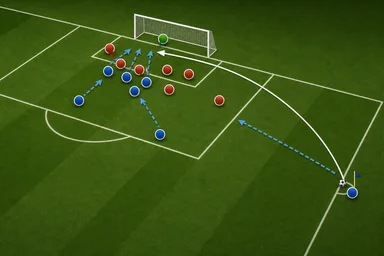
The tactical value of a deep goalkeeper pool extends beyond rotation. Each keeper in these trios offers a distinct profile, allowing managers to tailor their approach to specific opponents. Switzerland's Kobel is an aggressive sweeper, averaging 4.2 defensive actions outside the box per game. Against a team like Brazil, which thrives on through balls, Kobel's range could neutralize counter-attacks. Sommer, by contrast, is more conservative, preferring to stay on his line and rely on reflexes. Omlin excels at coming for crosses, which is useful against aerial threats like England or Serbia.
Morocco's keepers are similarly differentiated. Bono's calmness under pressure makes him ideal for possession-based build-up, while Munir's aggression on set pieces—he catches 96% of corners—could be decisive against teams like Belgium, which scores frequently from dead balls. El Kajoui's penalty-saving record (5 of 18) makes him a logical choice for knockout matches that might go to a shootout. Morocco's 2022 run saw Regragui use all three keepers: Bono started every match, but Munir played in a friendly before the tournament, and El Kajoui was on standby. The familiarity paid off when Bono saved penalties against Spain.
Substitution patterns also matter. In the 2026 tournament, with five substitutes allowed, managers can bring on a specialist keeper late in a match. For example, if Switzerland is protecting a lead against a team that relies on crosses, Omlin could replace Kobel for aerial dominance. If Morocco faces a team that wins many penalties, El Kajoui could be introduced in extra time. These tactical tweaks are only possible when the third keeper is of high enough quality to trust in a high-pressure moment. Few nations have that luxury.
Practical Takeaways for Selectors and Opponents
For selectors, the 2026 schedule demands a clear rotation plan. Three group matches in nine days mean that starting the same keeper in all three is risky. Switzerland's Yakin has shown willingness to rotate: in the 2023 Nations League, Kobel started against Spain, Omlin against Portugal, and Sommer against Germany. Morocco's Regragui has done the same in friendlies and AFCON qualifiers. Both managers have built a culture where competition for the starting spot is healthy, and no keeper feels entitled to the position.
Opponents must prepare for three distinct styles. A team facing Switzerland in the group stage cannot assume they will see Sommer; they may face Kobel's sweeping or Omlin's command of the box. This forces opponents to scout all three keepers, which takes time and resources. Similarly, Morocco's unpredictability—Bono's distribution, Munir's set-piece dominance, El Kajoui's penalty prowess—adds a layer of complexity to game planning. For smaller nations in the group stage, this depth could be overwhelming.
Yet there are trade-offs. Rotating keepers can disrupt defensive cohesion. Defenders build familiarity with a keeper's communication style, positioning, and preferred distribution. A change in keeper may lead to miscommunication on back passes or set pieces. Both Switzerland and Morocco have mitigated this by training all three keepers in the same system, but match-day chemistry is harder to simulate. Additionally, having three elite keepers means one will inevitably be unhappy with playing time, which can create locker-room tension. So far, both federations have managed this through transparent communication and merit-based selection, but the pressure of a World Cup could test that harmony.
Will Switzerland or Morocco convert this goalkeeping depth into a deep tournament run? The 2026 World Cup will provide the answer. For now, their pipelines serve as a model for national federations seeking to build resilience in a position often overlooked in squad planning. The data suggests that depth in goal is no longer a luxury but a strategic necessity—and Switzerland and Morocco are leading the way.