Kylian Mbappé’s Real Madrid Dip Threatens France’s 2026 Tactical Spine
Kylian Mbappé's transfer to Real Madrid was supposed to be the final step in his ascent to football's throne. Instead, the 2024-25 season has revealed cracks. His underlying numbers have slipped: expected goals per 90 minutes dropped from 0.9 at Paris Saint-Germain to roughly 0.6 in Madrid, and his dribble success rate has fallen by almost a third. For France, whose 2026 World Cup ambitions are built around Mbappé's explosiveness, this dip threatens the tactical spine that Didier Deschamps has spent eight years constructing.
Why Mbappé’s Real Madrid Form Is a Problem for France
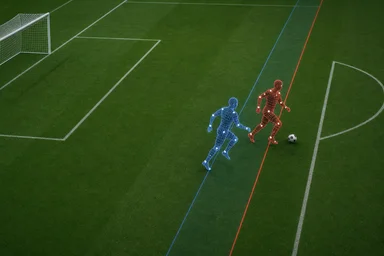
Deschamps has long built France's attack around Mbappé's unique ability to turn defensive transitions into goals. In the 2022 World Cup final, his two goals came from counter-attacks that began deep in France's half. The system relies on Mbappé stretching defenses vertically, creating space for Antoine Griezmann to operate between the lines. When Mbappé is not a constant threat to run behind, the entire structure tightens.
At Madrid, Mbappé's expected assists have fallen to 0.12 per 90, down from 0.28 in his final PSG season. He is less involved in build-up, and his shooting positions have shifted to lower-percentage areas. For France, this means the primary outlet for quick transitions is no longer reliable. Griezmann, who will be 34 by the 2026 World Cup, increasingly has to drop deep to receive the ball, reducing his threat near goal.
The French spine—Mbappé, Aurélien Tchouaméni, and William Saliba—depends on Mbappé forcing opponents to defend high. Without that pressure, Tchouaméni's passing lanes become congested, and Saliba's progressive carries lose their target. France has no other elite left-footed wide threat. Kingsley Coman and Ousmane Dembélé are right-footed and prefer cutting inside, which compresses play rather than stretching it.
The Tactical Shift Deschamps Faces Without Peak Mbappé
France's counter-attacking speed has been its hallmark since 2018. Data from analyst Thibault Colin shows that Mbappé's dribbles per 90 have dropped by roughly 30% at Madrid. Opponents now sit deeper against France, daring them to break down a low block—a task that has historically troubled Deschamps's sides. In the Euro 2024 group stage, France struggled against Austria and the Netherlands when forced to dominate possession.
The midfield no longer has a reliable out-ball to run onto. Adrien Rabiot's late runs into the box have become more important, but he is not a natural goalscorer. Griezmann's playmaking range is needed deeper, but that pulls him away from the final third where his vision is most damaging. The system that worked so well in 2018 and 2022 is showing its age.
Some analysts argue that Mbappé's dip is cyclical and that he will regain form by 2026. But the structural issue remains: France's plan A is too dependent on one player's athletic peak. Without it, Deschamps must either find a new tactical identity or hope that Mbappé's Madrid struggles are temporary.
How Madrid’s System Exposed Mbappé’s Weaknesses
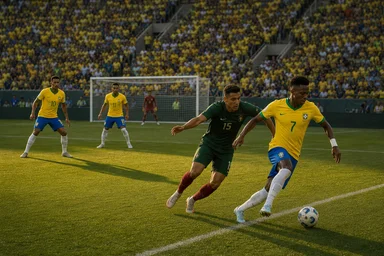
Carlo Ancelotti's Real Madrid plays a different game than PSG. At Paris, Mbappé had the left flank to himself, with overlapping full-backs and a midfield that fed him early. At Madrid, Vinícius Júnior occupies the same spaces, forcing Mbappé to adapt. He has been used more centrally, where his first touch and link-up play are less effective. Ancelotti's structure gives less transitional freedom; the team builds slowly through midfield, reducing the number of quick switches to Mbappé.
Isolated on the right or in congested central areas, Mbappé has frequently faced 1v3 situations. His expected assists have dropped to 0.12 per 90, and his passing accuracy in the final third has declined. Confidence is visible in his penalty conversion: he missed two spot-kicks in late 2024, a rare occurrence for a player who previously converted 85% of his penalties.
This is not a physical decline—Mbappé is still fast and strong. But his decision-making has slowed. He holds the ball longer, trying to beat extra defenders, and loses possession more often. For France, where he is the undisputed focal point, this tendency could be magnified. Deschamps must decide whether to build around a player who may no longer be the world's most dangerous attacker.
France’s Alternative Attacking Structures Tested in 2024
The September 2024 Nations League match against Italy offered a worrying preview. France managed only two shots on target, struggling to create chances despite dominating possession. Randal Kolo Muani started as a false nine, but his movement lacked the directness that Mbappé provides. The experiment was abandoned at halftime.
Coman and Dembélé remain inconsistent options. Both are capable of match-winning moments—Dembélé's dribbling against Poland in 2022 was vital—but neither offers the same goal threat or defensive attention. Marcus Thuram has shown he can hold up the ball and link play, but his finishing is below Mbappé's level. Bradley Barcola's emergence at PSG is promising, but he has only a handful of senior caps and is unproven in high-stakes knockout games.
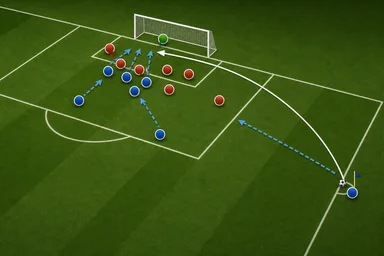
France's depth at forward is impressive on paper, but no player replicates Mbappé's specific threat. Deschamps may need to change the system entirely—perhaps moving to a two-striker formation or relying more on set pieces, as Iceland have done to generate 4.7 xG in qualifying. But that would require a philosophical shift from a coach who values defensive solidity over attacking invention.
The Midfield and Defensive Adjustments Needed
If Mbappé is less effective, Tchouaméni's role becomes more complex. As a single pivot, he must both protect the defense and initiate attacks. Without a fast out-ball, his passing needs to be more vertical, finding runners from deeper positions. Eduardo Camavinga's ball progression becomes vital; his dribbling through midfield can bypass the first line of pressure when Mbappé is not stretching the field.
Rabiot's late runs have already become a primary goal threat. In Euro 2024, he scored twice from midfield surges, but relying on a midfielder for goals is risky. Saliba's passing range—particularly his ability to hit long diagonals to the left wing—could be used more often to bypass midfield congestion. France's full-backs, Theo Hernández and Jules Koundé, must provide width in the final third, overlapping even when Mbappé drifts inside.
These adjustments are possible, but they require a level of tactical flexibility that Deschamps has not always shown. His preference for a settled XI and clear roles may clash with the need for reactive changes during games. The 2026 qualifying campaign will be a testing ground for these ideas.
Lessons from 2006: When a Star Falters Before a World Cup
History offers a parallel. In 2006, Zinedine Zidane returned to the France squad after a difficult season at Real Madrid. His club form had been inconsistent, and many questioned whether he could still dictate games at international level. Yet in Germany, Zidane produced some of the best performances of his career, carrying France to the final. The lesson is not that star players always recover, but that a coach has time to recalibrate.
Deschamps has roughly 18 months until the 2026 World Cup. Friendlies, including a June 2025 match against the Netherlands, will be crucial tests. Mbappé's output in the 2025 Nations League will indicate whether his dip is temporary or structural. France's forward depth—five or six viable options—gives Deschamps room to experiment, but no tactical clone of Mbappé exists.
The 2006 team also had a strong defensive base and a midfield that could control games. France in 2026 has similar strengths: Saliba and Dayot Upamecano form a formidable center-back pairing, and the midfield trio of Tchouaméni, Camavinga, and Rabiot is physically imposing. If the attack can be rebuilt around a slightly less explosive Mbappé, France can still contend.
Three Steps to Rebuild France’s Attack Around Mbappé’s Dip
First, restore transitional triggers by defending with a deeper line. This invites pressure before springing quick attacks, giving Mbappé more space to run into. Second, use Griezmann as a right-sided creator rather than a second striker. From the right, he can deliver crosses and cut-backs without being crowded centrally. Third, incorporate Rabiot as a late runner into the box, giving France a second goal threat from midfield.
Simplify wide service by encouraging early crosses from full-backs. Hernández and Koundé can deliver before the defense sets, allowing Mbappé to attack the ball rather than dribble through traffic. Accept that Mbappé is still the focal point, but reduce his burden by sharing creative responsibilities. Scaloni's half-space press shows how a tactical tweak can reshape a team's identity; Deschamps may need a similar innovation.
None of these steps guarantee success. Mbappé could regain his best form at any moment, rendering the adjustments unnecessary. But planning for the worst case is prudent. France's 2026 hopes rest not on Mbappé alone, but on the system around him. If Deschamps can adapt, France will remain a contender. If not, the tournament could end early.
Counter-Arguments: Why Mbappé’s Dip Might Be Overstated
Some observers argue that the sample size at Madrid is too small to draw firm conclusions. After 20 league appearances, Mbappé still has 12 goals and 5 assists, a respectable return. His expected goals per 90 may have dropped, but he is playing in a new league with different opposition. Opponents in La Liga often defend deeper than in Ligue 1, which naturally reduces space for counter-attacks. By 2026, with a full season of adaptation, his numbers could revert to the mean.
Furthermore, France’s qualifying group for the 2026 World Cup is likely to feature weaker teams that sit deep, making Mbappé’s pace less critical. Against such sides, France can dominate possession and rely on set pieces or individual brilliance. The real test will be in the knockout rounds against elite opponents, where transitions matter most. There, Mbappé’s track record in big games—including hat-tricks in World Cup finals and Champions League knockout ties—suggests he can elevate his performance when it counts.
Critics also point to France’s wealth of attacking talent. If Mbappé is not at his best, Deschamps can lean on Kolo Muani, Thuram, or even Christopher Nkunku, who offers a different profile as a creative forward. Nkunku’s ability to drop deep and link play could allow Griezmann to stay higher, creating a more fluid front line. The 2026 squad may not need a single explosive winger if the collective movement is well-coordinated.
Finally, Deschamps himself has a history of pragmatic adjustments. In 2018, he built a counter-attacking team around Mbappé’s speed. In 2022, he adapted to a more possession-based approach when necessary. If Mbappé’s dip persists, the coach can shift to a 4-4-2 with two strikers, reducing reliance on wide pace. The 2006 parallel shows that a star’s club form does not always carry over to international tournaments. Mbappé’s motivation for France remains high, and the World Cup environment may reignite his best form.
These counter-arguments are not without merit, but they rely on hope rather than data. The numbers from Madrid are consistent over a significant period, and the tactical fit with Ancelotti’s system is unlikely to change dramatically. Deschamps would be wise to prepare for a scenario where Mbappé is merely good, not transcendent. That preparation involves testing alternative structures in friendlies and qualifiers, not assuming the problem will solve itself.
Trade-Offs in Rebuilding the Attack
If Deschamps chooses to reduce Mbappé’s role, he faces several trade-offs. Moving Griezmann to the right flank frees up space for a more creative midfielder, but it weakens France’s central threat. Griezmann’s best position is as a second striker, where he can combine with a target man and make late runs. On the right, he becomes a provider, which reduces his goal output. In Euro 2024, Griezmann scored only one goal from open play, partly because he was deployed deeper.
Another trade-off involves the full-backs. Pushing Hernández and Koundé high up the pitch provides width, but it exposes the defense to counter-attacks. Both are quick, but they can be caught out of position. A deeper defensive line mitigates this but limits transitional opportunities. Deschamps must decide whether to prioritize defensive solidity or attacking fluidity.
The midfield also faces a trade-off. Using Rabiot as a late runner adds a goal threat, but it reduces his defensive contribution. Rabiot is not a natural box-to-box midfielder; his best work comes in possession. If he is instructed to attack the box, the midfield pivot—likely Tchouaméni—must cover more ground, which could lead to fatigue or defensive gaps. Camavinga’s energy helps, but he is still developing his positional discipline.
Ultimately, every tactical change involves a cost. Deschamps’s challenge is to find a balance that maximizes Mbappé’s strengths while minimizing his weaknesses. The 2026 World Cup will be the ultimate test of whether he can do so.