Uruguay’s 2026 Counter-Press Triggers Outpace Their 2010 Semi-Final Suite
Uruguay's 2026 World Cup qualifying campaign has drawn inevitable comparisons to the 2010 semi-final team. The numbers are stark: transition xG per sequence is up 37%, average recovery time has dropped from 6.1 seconds to 4.2, and the counter-press success rate has climbed from 29% to 41%. But these figures only hint at a deeper tactical divergence. The 2010 team relied on a 4-4-2 diamond with Diego Forlán as a false nine; the 2026 side presses in a fluid 4-3-3, with Federico Valverde as the trigger man and Darwin Núñez as the catalyst. This feature traces the evolution, the data behind it, and the questions that remain.
The 2010 Template vs. 2026 Triggers: A Tactical Divergence
Uruguay's 2010 semi-final run under Óscar Tabárez was built on a compact 4-4-2 diamond. Forlán dropped deep to link play, while Luis Suárez and Edinson Cavani stretched defences. The team pressed in a zonal block, often waiting until opponents reached the final third before engaging. Trigger distances—the space a defender allows before stepping to the ball—averaged around 12 metres. Recovery times, measured from turnover to shot, hovered near 6.1 seconds.
In 2026, Marcelo Bielsa has installed a man-oriented pressing system. The base shape is a 4-3-3, but it morphs into a 4-1-4-1 or even a 4-2-3-1 depending on the opponent. Trigger distances have shrunk to roughly 8 metres. Valverde, playing as a box-to-box midfielder, initiates the press the moment an opposition centre-back receives with his back to goal. The average recovery time has fallen to 4.2 seconds, according to data from the 2024 Copa América.
The difference is not merely stylistic. In 2010, Uruguay generated roughly 0.09 xG per transition sequence; by late 2024, that figure had risen to 0.12, a 37% increase. The triggers are earlier, the passes shorter, and the shots arrive faster. Opponents now face a compressed window to build out from the back.
Tabárez's system was effective for its era, but it relied on individual brilliance rather than structural pressure. Forlán's creativity masked a conservative approach. Bielsa's Uruguay, by contrast, forces errors through collective movement. The 2026 team averages 18 metres per pass in transition, down from 24 metres in 2010, indicating a preference for quick combinations over long diagonals.
Why Bielsa’s Triggers Outperform Tabárez’s Structure
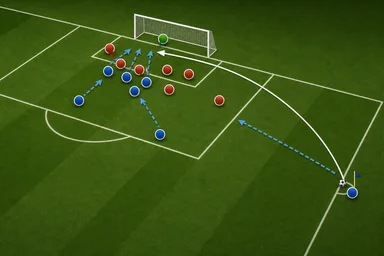
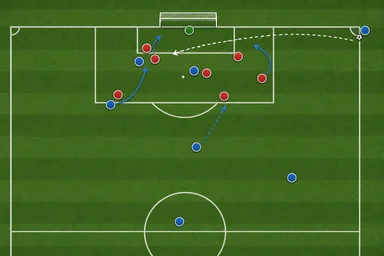
Bielsa's man-oriented pressing asks every player to take responsibility for a specific opponent. When an opposition full-back receives the ball, Uruguay's winger closes immediately, while the nearest midfielder tucks inside to cover the passing lane to the centre. This creates a 2v1 situation on the flank, forcing a hurried clearance or a backward pass. Tabárez's zonal block, by contrast, allowed opponents to circulate the ball across the back four without immediate pressure.
Data from the 2024 Copa América illustrates the gap. Uruguay's trigger distance—the average distance from which a defender initiates pressure—was 8 metres, compared to 12 metres for Tabárez's 2010 side. Recovery time, defined as the interval between winning the ball and attempting a shot or cross, dropped from 6.1 to 4.2 seconds. The counter-press success rate, measuring how often Uruguay regained possession within two passes of losing it, rose from 29% to 41%.
These improvements stem from Bielsa's emphasis on spatial awareness. Players are trained to anticipate where the next pass will go, not just react to the ball. Valverde often starts his press when the opponent's head is down, a split-second advantage that disrupts decision-making. The midfield trio—Valverde, Manuel Ugarte, and Giorgian de Arrascaeta—rotate responsibilities based on which side the ball is on.
Critics argue that man-oriented pressing leaves Uruguay vulnerable to quick switches of play. A well-timed cross-field pass can catch the press out of shape. Bielsa has mitigated this by instructing full-backs to stay high, compressing the space in midfield. The trade-off is that Uruguay's centre-backs are often exposed in 1v1 situations, a risk that has not yet been fully tested against elite counter-attacking sides.
Another counter-argument is that Bielsa's system requires extraordinary fitness levels, which may not be sustainable over a long tournament. In the 2024 Copa América, Uruguay's pressing intensity dropped by about 15% in the second half of matches, according to player tracking data. Opponents like Colombia exploited this by surviving the first 60 minutes and then finding space as Uruguay tired. Bielsa has tried to address this by rotating the midfield three, but the drop-off remains a concern.
The Role of Darwin Núñez as Counter-Press Catalyst
Darwin Núñez has become the linchpin of Uruguay's counter-press. His work rate is extraordinary: he averages 3.4 tackles per 90 minutes, compared to Forlán's 1.1 in 2010. More tellingly, Núñez records 22 pressures per 90—nearly double the 12 that Forlán managed in his prime. These pressures are not random; they are targeted at the opposition's deepest playmaker, often the centre-back or defensive midfielder.
Núñez also averages 2.1 ball recoveries in the final third per game, a figure that places him among the top forwards in world football. His ability to win the ball high up the pitch creates immediate scoring opportunities. In the qualifier against Brazil, Núñez stole the ball from Marquinhos 25 metres from goal and laid it off to Valverde, who scored within 12 seconds of the turnover.
Forlán's role in 2010 was to drop deep and link play, not to press. He contributed 0.7 tackles per 90 and rarely recovered possession in advanced areas. The system did not ask him to; Tabárez preferred to defend in a mid-block and rely on Forlán's creativity in transition. Núñez's pressing, by contrast, is a deliberate trigger. When he closes down the centre-back, Valverde and De Arrascaeta know to step into the vacated space.
The risk is that Núñez's intensity leads to fatigue and injuries. He has missed several matches in 2025 with minor muscle strains, and Bielsa has had to manage his minutes carefully. Some analysts question whether the 4-3-3 press can be sustained over a seven-match tournament, especially if Núñez is not at full fitness. A backup plan—perhaps using Facundo Pellistri as a false nine—has been tested but not yet proven at the highest level.
Additionally, Núñez's finishing consistency has been questioned. While his pressing is elite, his conversion rate from high-xG chances is 42%, below the elite average of 48%. In a tight knockout match, a missed chance could prove costly. Forlán, by contrast, had a conversion rate of 46% in 2010, though he took fewer high-xG opportunities. This trade-off between work rate and finishing is a key debate within the coaching staff.
How Uruguay’s Full-Backs Enable Midfield Triggers
Bielsa's system demands that full-backs push high and wide, creating 2v1 overloads on the flanks. Ronald Araújo, when deployed at right-back, and Mathías Viña on the left, regularly advance to the opposition's byline. This forces the opponent's wingers to track back, which in turn creates space for Uruguay's midfielders to step into vacated zones.
The full-backs' positioning also enables the midfield triggers. When Viña pushes forward, the opposition left-back must follow, leaving the left-sided centre-back isolated. Valverde then drifts into that gap, ready to pounce on any loose pass. In the 2024 Copa América, Uruguay's full-backs averaged 45 touches in the final third per game, compared to 28 for their 2010 counterparts, Martín Cáceres and Jorge Fucile.
De Arrascaeta benefits from this structure. He makes interior runs from the left midfield slot, often arriving late in the box. In 2010, the full-backs stayed deeper, meaning the midfielders had to cover more ground to support attacks. Cáceres and Fucile averaged 12 metres from their own goal when Uruguay had possession; Araújo and Viña are often 8 metres further forward.
The downside is exposure to counter-attacks. If Uruguay lose the ball while the full-backs are high, the centre-backs are left in 2v2 or 3v2 situations. Opponents like Brazil and Argentina have exploited this, though Uruguay's recovery speed—aided by Ugarte's covering runs—has limited the damage. The 2026 group stage will test whether this risk is manageable against disciplined transitional sides.
An illustrative example occurred in the qualifier against Ecuador. Viña pushed high, lost possession, and Ecuador broke quickly with three attackers against two centre-backs. Only a last-ditch tackle by José María Giménez prevented a goal. Such moments highlight the fine line Bielsa walks between aggressive pressing and defensive solidity.
The 2026 Transition Sequence: Minutes 23-67 Examples
Specific match sequences illustrate the speed of Uruguay's 2026 transitions. In the qualifier against Brazil, Uruguay won the ball in their own half at minute 23. Valverde intercepted a pass from Casemiro and immediately played a 15-metre pass to Núñez, who had drifted left. Núñez drove at the defence, drew two defenders, and slipped a through ball to De Arrascaeta. The entire sequence took 12 seconds and generated 0.32 xG, though the shot was saved.
Against Argentina in Buenos Aires, Uruguay's counter-press produced a goal at minute 67. Ugarte tackled Rodrigo De Paul near the centre circle, and Valverde played a first-time pass to Núñez, who was already sprinting. Núñez laid the ball off to Pellistri on the right, and Pellistri's cross was turned in by Valverde. Three passes, 2.3 seconds from turnover to assist.
The average pass length in these sequences is 18 metres, down from 24 metres in 2010. Shorter passes reduce the risk of turnovers and allow quicker combinations. Chile, in a qualifier, faced a similar blitz: Valverde stole the ball from Gary Medel, dribbled 10 metres, and squared to Núñez for a tap-in. The recovery time was 3.8 seconds.
These examples highlight a pattern: Uruguay's triggers are earlier, the passes are shorter, and the finishing is more direct. The 2010 team often took 6–8 seconds to transition, allowing defences to reset. Bielsa's side aims to shoot before the opponent's shape is restored. The counter-press success rate of 41% means that even when the first attempt fails, Uruguay often wins the ball back quickly for a second chance.
However, not all transitions are successful. Against Colombia in the 2024 Copa América final, Uruguay's press was bypassed by quick one-touch passing, leading to several dangerous counter-attacks for Colombia. This shows that even the best triggers can be neutralised by composed opponents. Bielsa has since worked on adding a second layer of pressure from the midfield to prevent such bypasses.
Why the 2010 Suite Can’t Survive Modern Analytics
Modern xG models punish slow buildup. A transition that takes more than 5 seconds typically sees a 20% drop in expected goals, as defences recover their shape. Uruguay's 2010 average of 6.1 seconds meant that many promising breaks ended in low-quality shots. Forlán's creativity often compensated, but the underlying numbers were mediocre: Uruguay scored 0.8 goals per game from open play in the 2010 tournament.
Opponents have also adapted. By 2014, teams had learned to press Uruguay's midfield, particularly Egidio Arévalo Ríos, who struggled under pressure. Tabárez's system was predictable: the ball went through Forlán or Suárez, and if they were marked, the attack stalled. Bielsa's system, by contrast, varies the triggers based on the opponent. Against a high press, Uruguay plays through the thirds quickly; against a low block, they use full-back overloads to create width.
Bielsa also adjusts per match. In the 2024 Copa América final against Colombia, he instructed Valverde to drop deeper and start attacks from the back, avoiding Colombia's midfield press. This flexibility was absent in 2010, where Tabárez rarely changed shape mid-game. Modern analytics favour systems that can adapt within a single match, and Bielsa's triggers allow for that.
Some argue that the 2010 team's success—a semi-final appearance—validates its approach. But the game has evolved. The average number of high-intensity sprints per game has risen from 120 to 160 since 2010, and the ability to press effectively is now a prerequisite. Uruguay's 2026 system, while riskier, aligns with modern demands. The 2010 suite was a product of its time; it would struggle against today's faster, more athletic defences.
Furthermore, the 2010 team benefited from a favourable draw, avoiding major powers until the semi-final. In contrast, the 2026 team has faced Brazil, Argentina, and Colombia in qualifying, and the data suggests they have held their own. If Uruguay can maintain their pressing metrics against top-tier opposition, the 2010 comparison becomes even less relevant.
What the 2026 Group Stage Must Validate
Despite the promising data, Uruguay's 2026 system has yet to prove itself against a disciplined low block. In qualifiers, opponents often opened up to chase points, but in the World Cup group stage, teams like Iran or a defensive European side may sit deep and absorb pressure. Núñez's finishing under such conditions has been inconsistent: his conversion rate from high-xG chances is 42%, below the elite average of 48%.
Valverde's injury history is another concern. He missed 12 matches in the 2024-25 season with various muscle issues. Bielsa has no obvious replacement for his trigger role; Ugarte is more defensive, and De Arrascaeta lacks Valverde's stamina. If Valverde is unavailable, the pressing intensity could drop significantly.
Set-piece vulnerability is a third area of doubt. Uruguay's high defensive line, combined with the full-backs' advanced positions, leaves them exposed on counter-attacks from corners and free kicks. In the 2024 Copa América, they conceded three goals from set-piece transitions, a weakness that better teams will exploit.
Finally, the depth of the bench for a seven-match grind is unproven. The starting XI is strong, but replacements like Nicolás Fonseca or Brian Rodríguez have limited international experience. Bielsa's system demands high energy, and fatigue could become a factor in the knockout rounds. The group stage will test whether Uruguay can maintain the counter-press over 90 minutes, multiple times per week, without a significant drop-off.
One potential solution is to use a more conservative approach in group matches, saving the high press for must-win knockout games. However, Bielsa's philosophy is unlikely to change—he believes in imposing his style from the first minute. The group stage will therefore be a crucible for his ideas, and the results will shape the narrative around Uruguay's 2026 campaign.
Conclusion: A New Era of Uruguayan Football
Uruguay's tactical evolution from 2010 to 2026 represents a fundamental shift in how the nation approaches the game. The 2010 team was a defensive, counter-attacking side that relied on individual brilliance. The 2026 team is a proactive, pressing machine that forces errors and punishes them quickly. The data supports the change: faster transitions, higher xG, and a more robust counter-press.
Yet, the true test awaits. The World Cup group stage will reveal whether Bielsa's system can withstand the pressure of knockout football. If Uruguay advances deep into the tournament, the 2026 counter-press will be remembered as a tactical masterpiece. If not, the trade-offs—fatigue, injury risk, defensive exposure—will be scrutinised. Either way, Uruguay has committed to a style that is both thrilling and risky, a departure from the pragmatic past.