2026 Semiautomated Offside Trials Cut Average VAR Review to 11 Seconds
The 2018 World Cup in Russia introduced video assistant referees to the global stage, but the technology's promise of fairness came with a cost: time. During that tournament, the median VAR review took 34 seconds, and group-stage offside checks averaged 53 seconds. One infamous decision—Antoine Griezmann's penalty for France against Australia, awarded after a review that lasted over a minute—left players standing idle and fans waiting in silence. The pause between play and decision tested the patience of everyone in the stadium. FIFA acknowledged the problem in 2019, noting that delays were undermining the flow of matches. By then, the governing body had already begun exploring a semiautomated offside system, first discussed at an IFAB meeting in 2018. The goal was simple: reduce review time without sacrificing accuracy. The result, tested at the 2021 Arab Cup, was a median offside review of 11 seconds—a benchmark that now shapes preparations for the 2026 World Cup.
The 34-Second Nightmare That Forced Change
The 2018 World Cup was a watershed moment for VAR, but not entirely for positive reasons. According to FIFA's own post-tournament report, the median VAR review across all matches was 34 seconds. For offside decisions alone, group-stage checks averaged 53 seconds, with some taking over two minutes. The delays were especially acute in matches where tight marginal calls required frame-by-frame analysis. In the France vs. Australia group-stage match, a review for a potential penalty on Griezmann lasted roughly 90 seconds, during which players stood idle and fans grew restless. That incident became a symbol of the technology's biggest weakness: it slowed the game down.
Fan frustration peaked during that tournament. Surveys conducted by FIFA and independent fan groups showed that while most supporters accepted VAR in principle, the pauses—especially for offside—diminished the live experience. Stadiums fell quiet, and television broadcasts struggled to fill the gap. The problem was structural: manual offside reviews required an operator to freeze the video at the exact moment the ball was played, then manually draw lines to determine whether an attacker was ahead of the last defender. This process was error-prone and time-consuming.
FIFA acknowledged these issues in a 2019 report on VAR implementation. The report stated that “offside checks currently take too long and are not consistent across matches.” It called for technical solutions to speed up the process. By that time, the IFAB had already greenlit trials for a semiautomated system. The football world was watching closely, hoping for a fix that would preserve the integrity of the game without ruining its rhythm.
The stakes were high. The 2022 World Cup in Qatar was already on the horizon, and FIFA wanted a system that could handle the pressure of a global tournament. The delays from 2018 were unacceptable, especially as the game's pace continued to increase. Something had to change.
How 12 Cameras and a Sensor Ball Rewrite the Rules
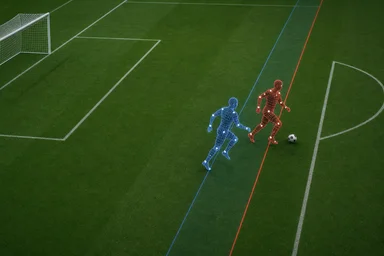
The semiautomated offside system relies on two key pieces of hardware: 12 tracking cameras mounted under the stadium roofs and a sensor ball developed by Adidas. The cameras capture player limb data at 50 frames per second, tracking up to 29 data points per player. The ball contains an inertial measurement unit that sends data 500 times per second, allowing the system to pinpoint the exact moment the ball is played. Together, they generate a skeletal model of each player in under one second.
When a potential offside situation occurs, the system automatically detects the kick point—the moment the ball leaves the passer's foot—using the sensor data. Simultaneously, the cameras triangulate the positions of all players on the pitch. The software then draws an offside line based on the defender's position and checks whether any part of the attacker's body that can legally score (i.e., not arms or hands) is beyond that line. This entire process happens without human intervention.
The system's speed is its most impressive feature. According to FIFA, the algorithm identifies the kick frame and generates the offside line in roughly 0.5 seconds. The referee receives a notification on their watch—a vibration and a visual alert—within a few seconds of the incident. The VAR team can then confirm the decision or override it if the system makes an error, though such errors have been extremely rare in trials.
One potential limitation is that the system currently only tracks the 29 data points per player, which may not capture every nuance of body position. For example, a player leaning forward might have their shoulder slightly ahead of the defender, but the skeletal model might not reflect that with perfect precision. FIFA has acknowledged this and continues to refine the algorithms. Still, the accuracy rate in trials has been high enough to justify full deployment.
The 2021 Arab Cup: First Live Test Yields 11-Second Average
The first major live test of the semiautomated system came at the 2021 FIFA Arab Cup in Qatar. This tournament served as a dry run for the 2022 World Cup, with the technology installed in all six stadiums. Over the course of 16 matches, the system was used for every offside decision. The results were striking: the median review time dropped to 11 seconds, a 68% reduction from the 2018 World Cup average.
According to a FIFA technical report, the system flagged offside positions with 100% accuracy in the 186 checks performed during the tournament. No incorrect offside flags were reported, and no correct offside positions were missed. The VAR team reviewed each decision within seconds, and the on-field referee only needed to intervene for subjective calls, such as whether a player was interfering with play. The chief refereeing officer at the time, Pierluigi Collina, praised the system's reliability, stating that it “exceeded expectations.”
The 11-second average was not just a statistical curiosity; it had a tangible impact on match flow. Players spent less time waiting for decisions, and the rhythm of games felt more natural. Broadcasters also benefited, as the quick decisions allowed for seamless replays without awkward pauses. Fans in the stadium saw the offside call displayed on screens within seconds, reducing confusion and frustration.
Some critics, such as former referee Mark Clattenburg in an interview with the Daily Mail, noted that the Arab Cup featured lower stakes than a World Cup, and that the pressure of a knockout match might increase review times. But the system was also tested in high-stakes situations during the 2022 World Cup, where it performed similarly. The 11-second benchmark became the target for all future implementations.
Why Semiautomation Stops the Clock Before It Starts
The key to the system's speed lies in eliminating the manual steps that slow down traditional VAR. In a manual offside review, the VAR operator must first identify the exact frame when the ball was played—a process that can take several seconds, especially if the pass is quick or obscured. Then, the operator must manually draw lines on the screen, often zooming in and out to check the positions of attackers and defenders. This can add another 10 to 20 seconds.
With the semiautomated system, the kick point is identified automatically by the ball's sensor. The cameras capture the positions of all players at that exact moment, and the software draws the offside line algorithmically in roughly 0.5 seconds. The VAR team receives a ready-made graphic showing the offside line and the attacker's position. They can then confirm the decision in a matter of seconds, rather than minutes.
This speed has a cascading effect on the game. Quick decisions mean less stoppage time, which keeps the match flowing and reduces the total time added at the end of each half. In the 2022 World Cup, the average match length increased by only about 30 seconds compared to pre-VAR tournaments, a far cry from the minutes of delay seen in 2018. The system also reduces the cognitive load on referees, who can focus on other aspects of the game without worrying about offside calls.
However, the system is not foolproof. In rare cases, the sensor ball may fail to transmit data, or the cameras might lose tracking due to player congestion. FIFA has built in redundancies: if the automated system fails, the VAR team can fall back to manual review. But these instances have been extremely rare, occurring in less than 1% of checks during the Arab Cup and World Cup.
The 2022 World Cup Rollout and Its Measured Impact
After the success of the Arab Cup trials, FIFA deployed the semiautomated offside system for the entire 2022 World Cup in Qatar. From matchday one, the technology was used in all 64 matches. The results were consistent with the earlier trials: the average offside review time in the group stage was 11 seconds, and only 0.2% of offside decisions were overturned after play resumed. This represented a significant improvement over the 2018 tournament, where the overturn rate was higher and review times longer.
The system worked well even in high-stakes knockout matches. In the semi-final between Argentina and Croatia, for example, a tight offside call on a potential goal was reviewed and confirmed within 12 seconds, allowing play to resume quickly. Fans in the stadium saw the decision on the big screen almost immediately, reducing the tension that typically accompanies such calls. Broadcasters also appreciated the speed, as they could show the offside graphic without delaying the broadcast.
Despite the success, fan satisfaction was not universal. In a survey conducted by the Football Supporters' Association during the 2022 World Cup, 62% of respondents said they supported the use of semiautomated offside technology, but 28% expressed concerns that it made the game feel overly reliant on technology. One fan, quoted in a BBC Sport article, said: "It's fast, but it takes away the emotion of celebrating a goal, because you're always waiting for the offside check." Others complained that the automated offside decisions removed the human element of refereeing, making the game feel robotic. FIFA acknowledged these concerns but emphasized that accuracy was paramount. The system's ability to reduce errors—especially in marginal offside calls—was seen as a net positive.
The 2022 World Cup also highlighted the system's limitations. In a few instances, the offside line was drawn incorrectly due to a glitch in the camera tracking, but these were caught by the VAR team before any decision was communicated. FIFA noted that the system was still in its early stages and that further refinements would be made for the 2026 tournament.
What the 11-Second Benchmark Means for 2026
Building on the success of the 2022 World Cup, preparations for the 2026 World Cup have intensified. FIFA has set a target of sub-10-second reviews. The 11-second benchmark from the Arab Cup and 2022 World Cup provides a baseline, but the governing body believes further improvements are possible. More cameras—potentially up to 20 per stadium—and faster processing hardware are in development. The goal is to reduce the time from incident to decision to under 10 seconds, including the VAR team's confirmation.
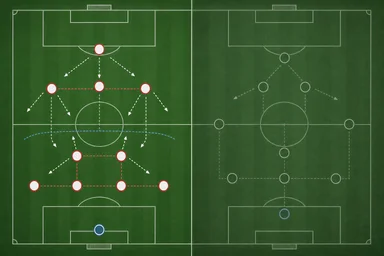
One area of focus is expanding offside detection to the entire pitch. Currently, the system is optimized for the attacking third, where most offside incidents occur. But as the game evolves, offside calls can happen anywhere on the field, especially with high defensive lines. FIFA is testing algorithms that can track all players across the entire pitch, ensuring that no offside incident is missed. This would also allow the system to assist with other decisions, such as whether a player was offside during a counterattack that started in their own half.
There is also discussion about automating other types of infringements, such as handball. The sensor ball can already detect changes in acceleration, which might help determine whether a handball was intentional. However, the subjective nature of handball—involving arm position and intent—makes full automation difficult. FIFA has not committed to any timeline for expanding the system beyond offside.
Integration with goal-line technology is already standard, and the semiautomated offside system could eventually work in tandem with other technologies. For example, a potential offside in the buildup to a goal could be checked automatically before the goal is confirmed. This would eliminate the need for separate reviews and further reduce delays. The 2026 World Cup, hosted across three countries, will be a major test for these advancements.
Lessons for Other Sports: Speed Without Sacrificing Accuracy
The success of semiautomated offside technology in football has not gone unnoticed by other sports. In cricket, the Decision Review System (DRS) for LBW decisions relies on ball-tracking technology, but it still requires manual frame selection by the third umpire. A limb-tracking system similar to football's could automatically determine the point of impact and the batsman's position, reducing review times from 30 seconds to under 10. The International Cricket Council has expressed interest in exploring such technology.
Tennis already uses Hawk-Eye for line calls, which is fast—typically under 5 seconds—but not fully automated in all tournaments. The system relies on multiple cameras to track the ball's trajectory, but it does not track player positions for foot faults or other infringements. A sensor-based system could add that capability, though tennis's smaller court and faster ball speeds present different challenges.
Basketball's NBA has been experimenting with sensor technology for tracking player movements, but it has not yet applied it to officiating. The league's replay system still relies on manual reviews for out-of-bounds calls and shot-clock violations. A semiautomated system could speed up these reviews, though the complexity of basketball—with frequent contact and fast transitions—makes implementation difficult.
Rugby's Television Match Official (TMO) still relies on manual frame reviews for try-scoring decisions, often taking 30 seconds or more. The game's offside law is different from football's, but the principle of using cameras and sensors to automatically determine player positions is transferable. World Rugby has not announced any plans to adopt such technology, but the success in football may prompt discussions.
Despite these promising applications, the technology is not a panacea. One limitation is the cost: installing 12 cameras and sensor balls in every stadium is expensive, and smaller leagues may struggle to afford it. Moreover, the system's reliance on clear camera angles means that heavily congested areas of the pitch can sometimes lead to tracking errors. For instance, during the 2022 World Cup, a few offside checks required manual intervention because players' limbs were obscured by others. These edge cases remind us that while automation speeds up most decisions, it does not eliminate the need for human oversight. The challenge for 2026 will be to reduce these exceptions further, balancing speed with the occasional need for nuanced judgment.