Three Time Zones and 22 Flights Shape 2026 Fan Route Decisions
For the first time in its history, the FIFA World Cup will be staged across three nations: the United States, Canada, and Mexico. The 2026 tournament, expanded to 48 teams and 104 matches, will stretch from Vancouver to Mexico City, covering three time zones and up to 9,000 miles of round-trip travel for some fans. FIFA estimates 5.5 million tickets will be available, but the geographic spread means no two fan itineraries will look alike. Supporters are already weighing factors like ticket draw luck, flight costs, and accommodation availability to map out their routes. This article presents data on ticket logistics, flight patterns, accommodation strategies, and the rising costs of following the tournament.
The Unprecedented Geographic Spread of 2026
The 2026 tournament will be played in 16 host cities: 11 in the United States, three in Mexico, and two in Canada. The westernmost venue, Vancouver's BC Place, sits in the Pacific time zone, while the easternmost, Toronto's BMO Field and Miami's Hard Rock Stadium, operate on Eastern time. Mexico's venues—Mexico City, Guadalajara, and Monterrey—fall on Central time, creating a three-zone tournament. A fan following a team from Seattle to Miami could cross four time zones if daylight saving is in effect. This spread is unprecedented. The 2002 co-hosts Japan and South Korea were separated by only one hour and a short flight. The 1994 US tournament had nine venues, all within the contiguous states, but none required crossing an international border. In 2026, a supporter traveling from Vancouver to Mexico City for a group stage match would cover roughly 2,600 miles each way—comparable to a flight from London to Tehran.
The expansion to 48 teams adds 16 more matches than the 2018 and 2022 tournaments, meaning more staggered kickoff times and longer group phases. Some teams will play in two different countries during the group stage. For example, a draw could send a European side from Toronto to Los Angeles within four days, forcing their fans to choose between a single destination or a cross-continental chase. FIFA's match schedule, released in early 2024, clusters some venues regionally—the Northeast corridor (New York, Boston, Philadelphia) and the West Coast (Los Angeles, San Francisco, Seattle)—but the knockout rounds will scatter teams unpredictably. The final is set for East Rutherford, New Jersey, but the semifinals and quarterfinals alternate between Dallas and Atlanta, among others. This means a fan who buys a ticket for the final cannot assume a single base city for the entire tournament.
According to a study commissioned by Airlines for America, the tournament is expected to generate 22 million additional passenger trips within the US alone, with roughly 3 million international visitors entering through gateway airports. The sheer volume of movement has already prompted airlines to add routes and increase frequencies on key corridors.
How Ticket Allocation Triggers Route Planning
FIFA's ticket allocation system operates in phases: a random draw for the general public, followed by a first-come, first-served window for remaining inventory. Team-specific supporter allocations—blocks of tickets reserved for each national association—typically sell out within hours. The uncertainty of the draw means a fan cannot book flights or hotels until they know which matches they've secured, creating a compressed planning window. For example, a Mexico supporter hoping to follow El Tri might apply for all three group-stage matches. If Mexico's group includes games in Mexico City, Houston, and Los Angeles, the fan would need to book three separate sets of travel. But if the draw yields only one match, the itinerary collapses to a single city. This lottery effect pushes many fans to apply for the maximum number of matches across multiple venues, then discard unwanted tickets later—a strategy that drives up secondary-market activity.
Single-match buyers face the hardest logistics. A fan who wins a ticket to a Round of 16 match in Kansas City, for instance, must scramble for flights and lodging after the knockout pairings are determined, often with less than a week's notice. Some travel insurers are now offering policies specifically for World Cup ticket holders, covering cancellation if the team they follow fails to advance. Hospitality packages, sold through FIFA's official partner MATCH Hospitality, bundle match tickets with flights and hotels, but at a premium. A group-stage package in New York starts around $2,500 per person, while a knockout-stage package can exceed $10,000. These packages simplify planning but lock fans into fixed itineraries, limiting flexibility if their team progresses further than expected. FIFA also introduced a Fan ID requirement for all ticket holders, costing $50 and requiring a background check. The ID is tied to the ticket and must be presented at stadium entry, adding a bureaucratic step that can delay travel plans if paperwork is not processed in time.
Flight Data Reveals Emerging Hub Strategies
Dallas/Fort Worth International Airport (DFW) has emerged as the central air hub for the 2026 tournament. Its location roughly equidistant from the East and West Coasts, combined with American Airlines' massive hub operation, makes it a natural connecting point for fans traveling between multiple host cities. DFW will also host nine matches at AT&T Stadium in Arlington, further cementing its role. Los Angeles International (LAX) and New York's John F. Kennedy (JFK) serve as the primary international gateways. LAX is expected to handle the bulk of arrivals from Asia and Oceania, while JFK and Newark will process European and African travelers. Both airports are undergoing major renovations to increase capacity, but delays are still expected during peak travel days, especially around the group-stage opening weekend.
Budget carriers are stepping in to fill gaps. Viva Aerobus, a Mexican low-cost airline, has announced new routes connecting Mexico City with Dallas, Houston, and Los Angeles. Similarly, Canada's Flair Airlines is adding frequencies between Vancouver and Seattle, and between Toronto and New York. These routes offer fares as low as $99 one-way if booked early, though prices are expected to spike during the tournament. A study by Airlines for America projects that average domestic fares will rise by roughly 30% during the tournament window compared to the same period in 2025. For a round-trip cross-country flight—say, from New York to Los Angeles—that means a price range of $500 to $900, depending on booking timing. International fares from Europe to the US are already up 15% year-over-year as of late 2024, according to flight data from Hopper.
Some fans are adopting hub-and-spoke strategies: booking a base city with direct flights to multiple host cities, then taking day trips or overnight hops. Dallas, Chicago, and Atlanta are popular hubs because of their central locations and multiple airline options. However, the strategy works best for fans attending matches in the same region; a fan with tickets in both Vancouver and Miami would still need a cross-continent flight.
Accommodation Crunch Forces Creative Lodging
Hotel rooms in host cities are already being booked at a rapid pace. According to data from STR, a hospitality analytics firm, room rates in New York, Los Angeles, and Toronto have increased by 40% compared to typical summer rates. In some cities, like Vancouver and Mexico City, inventory is so tight that the local government has imposed price caps—Toronto, for example, capped hotel rates at $350 CAD per night during the tournament. Airbnb listings in host cities have surged 150% since 2022, according to the company's internal data. Entire-home rentals in suburban areas near stadiums are particularly popular, with some hosts offering discounts for multi-week stays. However, critics note that short-term rentals can reduce long-term housing availability, a tension that has led to regulatory debates in cities like Boston and Los Angeles.
Perhaps the most creative solution is the use of cruise ships as floating hotels. In Miami, at least three cruise lines—including Carnival and Royal Caribbean—have announced plans to dock ships at the Port of Miami during the tournament, offering cabins for $200–$400 per night. Similar arrangements are being explored in Vancouver and San Diego, where port authorities have reserved berths for temporary accommodation. RV rentals are also surging. Outdoorsy, a peer-to-peer RV rental platform, reports that bookings for June and July 2026 in host cities are already 200% higher than the same period in 2023. Some fans plan to drive between venues, especially along the West Coast corridor from Seattle to Los Angeles, where camping sites and RV parks are abundant. The strategy saves on hotel costs but adds travel time and fuel expenses, which could exceed $1,000 for a multi-city road trip. A less-discussed approach is booking in non-host cities and commuting. San Diego, for example, is a 30-minute train ride from Los Angeles and offers cheaper lodging. Similarly, fans attending matches in Foxborough (Boston) might stay in Providence, Rhode Island, where hotel rates are roughly half. This requires reliable public transit, which varies by city; Amtrak's Northeast Corridor is a strong option, but inter-city buses in the West are less frequent.
Fan Clubs Build Itineraries Around Matches
Organized supporter groups are taking a proactive role in planning. The American Outlaws, the official US Soccer supporters' group, is offering a five-match group-stage package that includes tickets to all US group matches, plus a hotel block in each host city. As of early 2025, the package has sold out its initial allocation of 1,000 spots, and a waitlist has formed. Canadian supporters are targeting Vancouver and Toronto, the two Canadian host cities. The Voyageurs, Canada's national supporters' group, has coordinated with Air Canada to offer discounted group fares for fans traveling between the two cities. They are also organizing bus caravans from Winnipeg and Calgary to Vancouver, a 12-hour drive each way. Mexican fan groups, known for their elaborate travel traditions, are coordinating bus caravans from Mexico City to Guadalajara and Monterrey. Some groups are also planning cross-border trips to Dallas and Houston, where large Mexican-American populations are expected to create a home-away-from-home atmosphere. These caravans often include overnight stops and pre-arranged meals, reducing individual planning burdens.
European federations are also stepping in. The English Football Association's Travel Club has booked a block of 2,000 seats on charter flights from London to New York and Miami, with options to add internal flights. The German DFB is offering similar packages, though with a focus on direct flights to Munich's partner city—ironically, none of the German host cities from 2006 are involved in 2026. These organized groups provide economies of scale but also lock fans into fixed schedules. A supporter who wants to attend an unexpected knockout match may find the group itinerary inflexible. Some groups are addressing this by offering modular add-ons, such as a "knockout pass" that provides priority access to additional tickets and travel bookings after the group stage.
Digital Tools Reshape Real-Time Decision Making
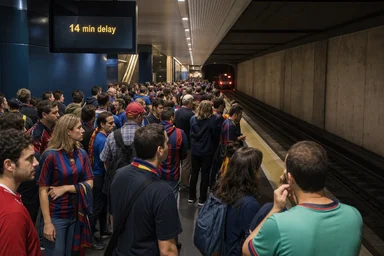
A new ecosystem of digital tools is helping fans manage the complexity. TripIt, a travel organization app, has integrated with FIFA's ticketing API to automatically import match schedules and venue details. A fan who buys tickets through FIFA's portal can see their entire itinerary—flights, hotels, and matches—in one timeline, with alerts for gate changes or transit disruptions. Google Maps has updated its transit data for stadium events, adding temporary bus routes and shuttle services for match days. The feature, first tested during the 2024 Copa América, allows fans to see real-time crowd density at transit stops and estimated walking times from subway exits to turnstiles. Early feedback suggests it reduces pre-match anxiety, especially in cities like Los Angeles where public transit is less comprehensive. WhatsApp groups have become de facto command centers. Fans share last-minute ride shares, sell unwanted tickets, and warn each other about security lines. Some groups are moderated by fan clubs, others are spontaneous. The informal nature means information quality varies, but the speed of communication often beats official channels.
FlightAware, a flight tracking platform, reports a 300% increase in users adding 2026-related flights to their watchlists. The app's alert system—notifying users of delays, cancellations, and gate changes—helps fans avoid missed connections, a particular risk for those with back-to-back matches in different cities. Some travel agents are even building custom dashboards for clients, integrating flight data with match times and hotel check-in windows. A startup called FanRoute raised $2 million in seed funding in late 2024 to build an itinerary optimization tool specifically for multi-venue tournaments. The app uses a genetic algorithm to suggest the most efficient sequence of flights and hotels given a set of match tickets, budget constraints, and time preferences. The company claims it can reduce total travel time by up to 20% compared to manual planning, though it has not yet been tested at scale. Critics argue that digital tools can create an over-reliance on technology, especially in areas with spotty connectivity. Stadiums in some Mexican host cities have limited 5G coverage, and Canadian venues in remote areas may experience network congestion. A paper map and a printed backup itinerary are still recommended by veteran travelers.
The Cost Calculus: Budgeting for 2026 Fandom
The average fan spend for the 2026 World Cup is estimated at $4,500 per trip, according to a survey by the Sports & Fitness Industry Association. This includes tickets, flights, accommodation, food, and merchandise. The figure is roughly 20% higher than the estimated average for the 2022 Qatar World Cup, reflecting longer travel distances and higher lodging costs. Group stage ticket prices range from $60 for the cheapest category in some venues to $1,100 for premium seats. Knockout matches are more expensive: a semifinal ticket in Atlanta could cost up to $1,800, while the final in New Jersey tops out at $2,500. Hospitality packages, which include premium seating and catering, can exceed $5,000 per match. Round-trip cross-country flights within the US are expected to cost between $500 and $900, depending on booking timing. A fan flying from London to New York can expect to pay $700–$1,200 for economy, while a flight from Tokyo to Los Angeles might run $1,200–$1,800. Budget airlines like Norse Atlantic and WestJet offer lower fares but with stricter baggage policies and fewer schedule options.
Hotel per-night costs vary widely: $200–$400 in secondary host cities like Kansas City or Monterrey, $300–$600 in major markets like New York or Los Angeles. Airbnb rates are slightly lower but still elevated. A fan staying 14 nights across three cities could spend $3,000–$6,000 on lodging alone. Other expenses add up: the FIFA Fan ID costs $50; transportation within cities (rideshares, subway, shuttles) might total $300–$500; food and drink at stadiums is priced at $10–$20 per item. Merchandise—jerseys, scarves, flags—can easily exceed $200. Some fans budget an additional $500 for emergencies, such as a missed flight or a hotel cancellation. There are ways to reduce costs. Booking flights and hotels as soon as tickets are confirmed can lock in lower prices. Traveling with a group splits lodging and ride costs. Choosing non-host cities for accommodation and commuting can save 30–50% on lodging. But these strategies require flexibility and advance planning, which not all fans can afford.
As the tournament approaches, one pressing question remains: will the logistical complexity deter casual fans from attending, or will the allure of a cross-continent World Cup outweigh the hassle? For many, the answer may hinge on whether digital tools and fan clubs can sufficiently reduce the planning burden.