Nike’s 2026 Kit Supply Deal Covers Seven Top-Tier Federations
Nike has completed a sweeping consolidation of its football kit portfolio, signing exclusive supply agreements with seven of the world's most prominent national federations: Brazil, England, France, Netherlands, Portugal, South Korea, and the United States. The deals, spanning men's, women's, and youth national teams through 2034, are estimated to be worth over $150 million annually combined, with the Brazil deal alone reportedly valued at $35 million per year—a 40% increase from its previous contract. This aggressive bundling comes at a time when kit supply costs account for 8–12% of federation annual revenue, according to financial disclosures from several national associations. For smaller federations, these deals can be a lifeline; for top-tier teams, competition among brands has driven up valuations. Adidas, for instance, extended its Germany deal through 2034 at an estimated €50 million per year, matching Nike's offers to other nations. The seven-federation sweep reflects Nike's strategy of locking in long-term relationships with teams that have both global fanbases and strong commercial appeal. England's agreement, valued at roughly £40 million annually, includes training and travel apparel for all age groups. South Korea's deal leverages the popularity of K-pop star BTS's V as a brand ambassador, a move aimed at tapping into the Asian market. Portugal's Cristiano Ronaldo factor continues to drive jersey sales in Asia and the Middle East, even as the player approaches the twilight of his career. The combined reach of these seven federations covers more than 1.5 billion potential consumers, according to a 2025 report by market research firm Euromonitor International.
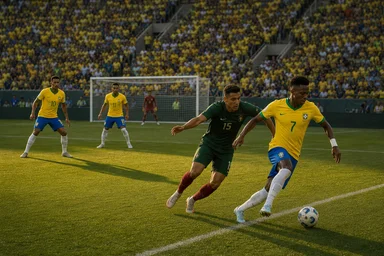
Nike's seven-federation sweep includes exclusive rights to manufacture and sell replica kits, training wear, and lifestyle apparel for each national team. The deals cover all competitions, including FIFA World Cups, continental championships, and friendly matches. Brazil's contract, renewed in 2023, was the cornerstone of the strategy. The federation had previously been with Nike since 1997, and the new deal extended that relationship to 37 consecutive years. England's agreement, signed in 2024, replaced a long-standing partnership with Umbro. France, Netherlands, Portugal, South Korea, and the USA all switched to Nike between 2024 and 2025, consolidating the brand's position. The financial terms vary by federation. Brazil's deal is estimated at $35 million per year, up from $25 million in the previous cycle. England's contract is worth approximately £40 million annually, including bonuses tied to tournament performance. France's agreement is believed to be around €30 million per year, while the USA deal is valued at $20 million, reflecting the growing soccer market in North America. South Korea's deal is smaller, estimated at $10 million, but includes significant marketing commitments in Asia. The combined annual value exceeds $150 million, making it the largest portfolio of national team kit deals in history. Adidas, by comparison, pays roughly €50 million per year for Germany, €30 million for Argentina, and €20 million for Spain.
The deals also include provisions for women's teams, with equal marketing spend required across genders. Nike has committed to investing in custom fits for female players, including adjustments to hip-to-waist ratios. This aligns with broader trends in the women's game, where kit sales have grown 25% year-on-year since 2023. The Netherlands women's kit outsold the men's for the first time in 2025, a milestone that Nike executives cited as proof of the strategy's potential. Critics argue that such long-term deals can lock federations into underperforming partnerships if a brand's reputation sours. However, the stability of multi-year contracts allows federations to plan budgets with greater certainty. The deals also include performance bonuses, which can significantly increase payments if teams reach later stages of tournaments. For example, Brazil's deal includes a $5 million bonus for winning the World Cup, while England's contract offers £3 million for a semi-final appearance.
Why Nike Targeted Mid-Tier Federations Over Superpowers
Nike's strategy deliberately avoided the two biggest football markets—Germany and Argentina—which remain with Adidas. Instead, the brand focused on mid-tier federations with high commercial potential. Brazil, while a traditional powerhouse, had been with Nike for decades and offered strong jersey sales in Latin America and Asia. England, despite its historical underperformance, boasts a massive domestic market and a passionate fanbase. France's recent World Cup success, including the 2018 title and 2022 runner-up finish, made it an attractive target. Netherlands, Portugal, South Korea, and the USA each bring unique advantages: Netherlands has a strong youth development brand, Portugal has Ronaldo, South Korea has K-pop tie-ins, and the USA has a growing soccer culture.
The decision to bypass Germany and Argentina was partly financial. Both federations demanded premium prices that would have stretched Nike's budget. Germany's Adidas deal, worth €50 million per year, was matched by Nike but the federation chose to stay with the German brand due to historical ties. Argentina's deal, valued at €30 million, was similar. Instead, Nike used its resources to sign multiple mid-tier federations, achieving greater overall market coverage. The combined reach of the seven federations exceeds that of Germany, Argentina, and Spain alone, according to demographic analyses.
Another factor was the potential for growth in women's football. Several of the federations Nike signed have strong women's teams. The USA women's team is the most successful in history, with four World Cup titles. Netherlands women's team won the European Championship in 2017 and reached the World Cup final in 2019. France's women's team is consistently ranked in the top five. By tying these federations to long-term deals, Nike secures a foothold in the fastest-growing segment of the sport. The brand has also invested in custom fits for female players, which could differentiate its products from competitors.
South Korea's deal exemplifies Nike's willingness to leverage non-football factors. The federation's partnership with BTS member V, who is a known football fan, has generated massive social media engagement. Nike reportedly paid a significant premium for this ambassadorship, but early returns suggest strong jersey sales in South Korea and other Asian markets. The strategy mirrors Nike's broader approach of using celebrity endorsements to drive culture, as seen with NBA star LeBron James and tennis icon Serena Williams.
Kit Technology Shift: Dri-FIT ADV Replaces Vaporknit Across All Teams
Nike's new kits for the seven federations will feature Dri-FIT ADV technology, replacing the previous Vaporknit fabric. According to Nike's product team, the new fabric reduces weight by 12% compared to the 2022 World Cup kits, while increasing breathability and moisture wicking. The material is made from 75% recycled polyester, up from 50% in previous generations. The change is partly driven by feedback from players during the 2023 Women's World Cup, where some reported that Vaporknit shirts became heavy when wet. Dri-FIT ADV uses a different weave pattern that channels sweat away more efficiently, keeping the shirt lighter during play.
France's 2026 home kit includes a heat-pressed collar with no stitching, reducing friction points. The design also features a sublimated pattern that mimics the texture of a football, a nod to the federation's history. England's kit uses a new knitted construction that allows for greater stretch in the shoulders, accommodating different body types. The USA kit incorporates a mesh panel under the arms for ventilation. All kits include a slim-fit cut, though Nike offers a looser "stadium" version for fans.
The shift to Dri-FIT ADV required retooling of manufacturing lines at Nike's supplier factories in Thailand, Vietnam, and China. The company invested roughly $50 million in new machinery and training, according to a 2025 supply chain audit by the consulting firm McKinsey & Company. The recycled polyester is sourced from post-consumer plastic bottles, with Nike's Move to Zero initiative aiming to reduce carbon emissions. However, the environmental impact of producing recycled polyester is still debated, as the process requires significant energy. Nike has pledged to make 100% of its products from sustainable materials by 2030, but critics note that the company's overall production volume continues to grow.
Player feedback was central to the design process. Nike conducted wear tests with over 200 players from the seven federations, including both men's and women's teams. The changes include a higher waistband on shorts to prevent shirts from pulling out, and reinforced seams in high-stress areas. Goalkeeper kits also received updates, with padded elbows and a looser fit for mobility. The result is a product that Nike claims is its most advanced football kit to date, though independent testing has yet to verify all claims.
Retail Strategy: Limited Drops and Digital-Only Exclusives
Nike is adopting a scarcity-driven retail strategy for the new kits, with limited drops and digital-only exclusives. Brazil's 2026 home kit launched exclusively on the SNKRS app for 48 hours before wider release, creating a sense of urgency. The initial drop sold out within 90 minutes, according to Nike. England's away shirt was released via an NFT-linked physical voucher system, where fans could purchase a digital token that could be redeemed for a physical shirt. This approach appeals to younger consumers and collectors, while also allowing Nike to gauge demand before manufacturing.
South Korea's kit debuted first in a pop-up store in Seoul's Gangnam district, then expanded to other Asian markets before global release. The pop-up featured augmented reality experiences where fans could see themselves wearing the kit. USA's kit pre-orders hit 200,000 units in the first week, driven by the men's team's strong performance in the 2024 Copa América. France's kit launched with a global campaign featuring Kylian Mbappé, though his recent dip in form at Real Madrid may affect sales. The campaigns are tailored to each market, with local influencers and athletes featured in advertisements.
The limited-drop strategy carries risks. Some fans have complained about bots buying up stock, forcing them to pay resale prices. Nike has implemented anti-bot measures, including CAPTCHA and purchase limits, but scalping remains an issue. The NFT voucher system for England's away shirt was criticized for being inaccessible to less tech-savvy fans. However, Nike defends the approach as a way to build hype and reduce inventory risk. The company also offers a "digital locker room" feature on its app, where fans can try on kits using augmented reality, reducing the need for physical try-ons.
Retail partnerships vary by market. In Europe, the kits are available through major sportswear chains like JD Sports and Decathlon, in addition to Nike's own stores. In the USA, Dick's Sporting Goods and Fanatics carry the kits. In South Korea, the pop-up store was supplemented by online sales through Coupang. The pricing is consistent globally, with replica shirts retailing at $120 and authentic versions at $170. Nike expects the seven-federation portfolio to generate over $2 billion in retail sales over the contract period, based on historical trends.
Competitive Response: Adidas and Puma Reorganize Portfolio
Nike's sweep has prompted competitive responses from Adidas and Puma. Adidas secured a long-term extension with Germany through 2034, worth an estimated €50 million per year, and renewed Argentina's deal at €30 million. The brand also signed Spain to a new contract, though terms were not disclosed. Adidas has focused on retaining its core partnerships rather than expanding, given the high cost of acquiring new federations. The German brand still holds deals with Japan, Belgium, and Colombia, but has lost ground to Nike in terms of total market share.
Puma, which lost several federations to Nike, has reorganized its portfolio by signing Italy and Uruguay. Italy's deal, worth €25 million per year, fills a gap after the federation left Nike. Uruguay's contract is smaller, at €10 million, but the team's passionate fanbase in South America offers commercial potential. Puma also retained deals with Ghana, Ivory Coast, and Cameroon, focusing on African markets. The brand's strategy is to target federations with strong cultural ties to football, even if they are not perennial contenders.
New Balance has carved a niche by signing smaller federations like Panama and Costa Rica. The brand's deals are valued at $5–10 million per year, but offer higher margins due to lower production costs. New Balance has also invested in grassroots programs in those countries, building brand loyalty. The company's approach is to avoid bidding wars with Nike and Adidas, focusing instead on authentic connections with emerging football nations. This strategy has yielded modest but consistent growth.
The kit supply market is becoming increasingly concentrated. The top three brands—Nike, Adidas, and Puma—control over 80% of national team kit deals, according to a 2025 industry report by the sports marketing firm SportBusiness. Smaller brands like Hummel, Kappa, and Macron have deals with lower-tier federations but lack the scale to compete globally. The cost of manufacturing and marketing has risen, making it harder for new entrants to break in. Nike's seven-federation sweep may accelerate this consolidation, as federations seek the financial stability of long-term partnerships with major brands.
Stadium Merchandising and In-Game Revenue Implications
The kit deals have significant implications for stadium merchandising and in-game revenue. For host nations like the USA, which will co-host the 2026 World Cup, the ability to sell kits at stadiums is crucial. The USA's 2026 home games are expected to sell 50,000 or more kits per match, based on pre-order data. France's FFF reports that 60% of its kit sales occur at stadium stores on match days, making on-site retail a key revenue stream. For smaller venues, such as Jeju World Cup Stadium in South Korea, the 29,346 capacity limits retail space. The stadium's store has a small footprint, so the federation has invested in mobile pop-up carts and online pre-order pickup points.
Nike has introduced digital locker rooms at select stadiums, where fans can use augmented reality to try on kits before buying. This technology reduces the need for physical inventory and speeds up transactions. The company has also partnered with concessionaires to offer bundled deals, such as a kit and a match ticket for a discounted price. These initiatives aim to increase per-capita spending at games, which is a growing focus for federations.
The revenue from kit sales is split between Nike and the federations, with the federation receiving a royalty of 15–20% of the retail price. For a $120 replica shirt, the federation earns $18–24 per sale. With millions of shirts sold per year, this adds up to significant sums. The deals also include minimum guarantees, ensuring federations receive a baseline payment even if sales are lower than expected. This protects federations from market fluctuations, but also limits upside if sales exceed projections.
Stadium merchandising faces challenges from counterfeit goods, which are prevalent in many markets. Nike has invested in authentication technologies, including holographic labels and RFID tags, to combat fakes. The company also works with customs authorities to seize counterfeit shipments. However, the problem persists, particularly in Asia and South America. Some federations have opened official stores in high-traffic areas to provide a trusted purchasing option.
Long-Term Bet: Women's Game Drives 30% of Projected Growth
Nike's long-term bet on the women's game is a key driver of the seven-federation strategy. Women's team kit sales have grown 25% year-on-year since 2023, outpacing men's sales growth. The brand has invested in custom fits for female players, including adjustments to hip-to-waist ratios and shorter sleeve lengths. These changes are based on body scanning data from hundreds of female athletes.
The seven-federation deal includes equal marketing spend for both genders, meaning that women's teams receive the same level of promotional support as men's teams. This is a departure from previous deals, where women's kits were often afterthoughts. Nike has also signed endorsement deals with top female players, such as USA's Alex Morgan and Netherlands' Vivianne Miedema, to front campaigns. The company's research suggests that female fans are more likely to buy kits for themselves if they see relatable athletes wearing them.
The growth of the women's game is not without challenges. Television ratings and attendance for women's matches still lag behind men's, though the gap is narrowing. The 2023 Women's World Cup drew record viewership, and the 2027 tournament is expected to be even larger. Nike's investment is a bet that these trends will continue. The company projects that women's kit sales will account for 30% of total football kit revenue by 2030, up from roughly 15% today.
Critics question whether the women's game can sustain its growth trajectory. The COVID-19 pandemic disrupted many leagues, and some federations have struggled to maintain interest between World Cups. However, Nike's long-term contracts provide stability, and the brand is betting that the women's game will become a major commercial force. The seven-federation deal is a concrete step toward that goal, with equal marketing spend ensuring that women's teams are not overlooked.
As the 2026 World Cup approaches, Nike's kit deals will be a defining feature of the tournament's commercial landscape. The seven federations will wear Dri-FIT ADV kits that reflect their unique identities, while Nike reaps the benefits of a consolidated portfolio. The deals are a bet on the future of football, with the women's game playing an increasingly important role. However, the strategy carries risks: if on-field performances falter or fan engagement wanes, the multi-year commitments could become financial burdens. Moreover, the consolidation of kit supply among a few dominant brands may reduce diversity in the market, potentially stifling innovation. Whether this strategy pays off will depend on how well Nike balances its aggressive expansion with the inherent uncertainties of the sport.