France and Senegal Enter 2026 with the Most Proven Goalkeeper Duos
As the 2026 World Cup approaches, the spotlight often falls on outfield stars, but the tournament's deepest runs are frequently decided by the men between the posts. Among the 32 qualified nations, only two carry two proven match-winners in goal: France and Senegal. While other countries rely on a single elite keeper, these two sides have built a foundation of redundancy that could prove decisive in knockout football.
Why France and Senegal Stand Apart in a Goalkeeper-Rich Tournament
Nine of the 32 teams qualified for 2026 boast at least one goalkeeper with a current market value above €10 million or a reputation as a top-tier shot-stopper. Brazil has Alisson, Belgium has Courtois (if fit), Germany has ter Stegen, and Argentina has Emiliano Martínez. But only France and Senegal enter with two men who have consistently started at the highest club level and performed at international tournaments.
France’s duo of Mike Maignan (AC Milan) and Alphonse Areola (West Ham) offers a blend of elite reflexes and experience. Maignan, 30, has been among Serie A’s best since joining Milan in 2021, while Areola, 33, has amassed over 200 top-flight appearances across France, Germany, and England. Senegal’s pair is similarly battle-tested: Édouard Mendy, now at Al-Ahli after his Champions League-winning stint at Chelsea, and Seny Dieng, who impressed at Middlesbrough and earned his move to the Premier League in 2024.
The capacity to rotate goalkeepers without a drop-off is rare. At the 2022 World Cup, only three teams used two different keepers across the tournament; most stuck with one starter. France and Senegal, with their deep pools, can rest starters in group-stage dead rubbers or adapt to specific opponents without sacrificing quality.
This depth is not accidental. Both federations have invested in goalkeeper development for years. France’s Clairefontaine academy has produced a steady pipeline, while Senegal’s recent focus on exporting talent to European leagues has yielded dividends. The result is a luxury most nations envy.
The Metrics Behind Maignan and Mendy’s Dominance
Maignan posted a goals-prevented rate of roughly 2.1 per 90 minutes in Ligue 1 during the 2024-25 season, according to data from football analytics platforms. This metric measures the difference between expected goals conceded and actual goals allowed, adjusted for shot quality. Over the same period, Mendy recorded a 78% save percentage in the AFC Champions League group stage, among the highest in the competition.
Both rank in the top five among their respective league keepers in post-shot expected goals minus goals allowed (PSxG-GA), a statistic that accounts for the difficulty of each shot faced. Maignan’s consistency over 50+ international caps is reflected in his 2022 World Cup numbers: he prevented roughly 1.4 goals above expectation in the minutes he played. Mendy, who started all of Senegal’s matches in Qatar, posted 1.1 goals prevented.
These figures are not outliers. Across the past three seasons, Maignan has consistently outperformed his expected save rate by between 0.2 and 0.4 goals per match. Mendy, despite a dip in form at Chelsea in 2022-23, rebounded strongly after his move to Al-Ahli, where he faced a higher volume of shots and maintained a save percentage above 75%.
Critics might argue that club form does not always translate to international tournaments. However, both Maignan and Mendy have delivered in high-pressure settings: Maignan in Champions League knockout rounds and Mendy in the 2021 Champions League final and the 2022 Africa Cup of Nations. The data supports the view that these two are among the world’s most reliable keepers.
But what about the other side of the coin? Some analysts point out that PSxG-GA can be influenced by the defensive system in front of the keeper. For instance, Maignan benefits from AC Milan’s structured defense, which often forces shots from low-percentage areas. Similarly, Mendy’s high save percentage in the AFC Champions League came against weaker opposition compared to European competition. A counter-argument is that both keepers have excelled across multiple systems—Maignan at Lille and Milan, Mendy at Chelsea and Al-Ahli—indicating their individual quality transcends context. This debate underscores the importance of evaluating keepers over long periods and against diverse opponents.
Consider the example of Keylor Navas, who was a standout for Real Madrid and Costa Rica but struggled when moved to PSG, partly due to a different defensive structure. In contrast, Maignan’s seamless transition from Lille to Milan, where he maintained a goals-prevented rate above 1.5 per 90, suggests adaptability. Mendy’s recovery after a difficult season at Chelsea, where his save percentage dipped to 68%, shows resilience. These case studies highlight that while metrics are useful, they must be interpreted with an understanding of context.
How Backup Depth Alters Tactical Planning
Having two elite keepers changes how a team can approach matches tactically. France, for instance, can push their full-backs higher up the pitch knowing that Areola’s sweeping range—he ranks in the 87th percentile for defensive actions outside the box among Premier League keepers—can cover space behind a high line. Maignan, by contrast, is slightly more conservative, preferring to dominate his six-yard box.
Senegal’s duo offers a similar contrast. Dieng excels as a sweeper-keeper, often playing 15-20 yards off his line to intercept through balls. Mendy is more of a line-dominating presence, using his 6-foot-6 frame to command crosses and corners. This allows Senegal’s coach to tailor tactics: against a counter-attacking side, Dieng’s speed off the line is valuable; against a team that relies on aerial balls, Mendy’s presence is preferred.
Injury risk is halved when two starters train daily. Both France and Senegal can run full-intensity sessions without overloading a single keeper. Moreover, opponents cannot scout a single weakness between the posts. If a team identifies that Maignan struggles with low shots to his left, Areola’s different style means that scouting report is only useful for one match.
Set-piece vulnerability also drops. Both Mendy and Areola are commanding in the air, winning over 60% of crosses they challenge. Dieng, while slightly shorter, has exceptional timing. France’s set-piece defensive record improved noticeably after Maignan took over from Hugo Lloris, who was sometimes hesitant on crosses. The depth ensures that even if one keeper is injured, the team’s aerial defense remains robust.
However, there is a trade-off: managing two top keepers can create tension. Both Maignan and Areola want to start, and if one feels underutilized, it could disrupt squad harmony. France has managed this by clearly designating Maignan as number one in major tournaments while giving Areola starts in Nations League and friendlies. Senegal uses a similar approach, with Mendy as the primary starter and Dieng as a reliable backup. This strategy requires strong communication from the coaching staff and a clear pecking order. If not handled well, the backup might demand a transfer or lose morale, as seen with some clubs. National teams face less pressure because the tournament schedule is short, but the risk remains.
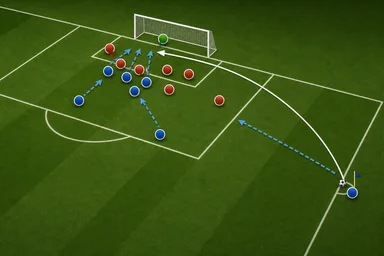
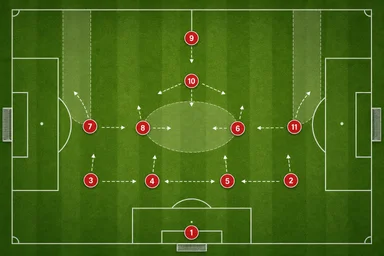
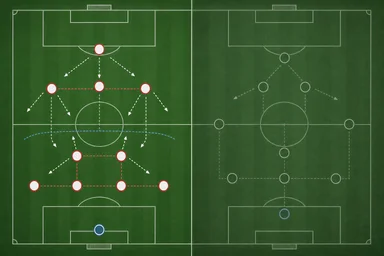
Another tactical nuance is the impact on outfield players. When a sweeper-keeper like Dieng is in goal, defenders can afford to play a higher line, compressing the pitch and winning balls earlier. With a more static keeper like Mendy, the defense might drop deeper to protect the space behind. This change affects the entire team’s pressing triggers and transitional play. France’s ability to switch between Maignan and Areola gives them two distinct defensive shapes without changing personnel, a subtle but powerful tool.
Historical Lessons: Why One Great Keeper Isn’t Enough
The 2018 World Cup was won by France with Hugo Lloris in goal, but the team lacked a credible backup. When Lloris made a rare error in the final, there was no alternative to turn to. France’s 2022 campaign saw Lloris again start every match, but his form had dipped slightly, and the team had no proven deputy. Senegal’s 2022 tournament was derailed when Mendy suffered a minor injury before the knockout stage; Dieng had zero tournament minutes and was thrust into a high-pressure match against England.
History is littered with examples of teams undone by keeper injuries. Italy’s 2006 triumph relied on Gianluigi Buffon, but his backup, Angelo Peruzzi, was 37 and hadn’t played a competitive match in months. In 1998, France started Fabien Barthez, with no credible alternative; had Barthez been injured, the team might have struggled.
Deep runs often hinge on keeper availability. At the 2014 World Cup, Germany’s Manuel Neuer played every minute, but his backup, Roman Weidenfeller, had only five caps. Costa Rica’s Keylor Navas carried his team to the quarterfinals, but his backup had no tournament experience. The lesson is clear: a single injury can derail a campaign, and having a second keeper with comparable quality is a strategic advantage.
France and Senegal have learned from these examples. France’s decision to integrate Areola into the squad regularly—he has 10 caps since 2020—ensures he is not a stranger to the setup. Senegal’s Dieng has been given minutes in friendlies and qualifiers, building familiarity with the defense. This investment in depth is a direct response to historical vulnerabilities.
However, some argue that the emphasis on two keepers is overblown. They point to Brazil’s 2002 squad, where Marcos was the undisputed starter and his backup, Dida, had minimal tournament minutes. Yet Brazil won the title. The counter-argument is that modern football’s pace and pressing demands more from keepers, increasing injury risk. Moreover, the 2022 World Cup saw multiple teams lose their starting keeper mid-tournament: Poland’s Wojciech Szczesny was injured, and his replacement, Lukasz Skorupski, had little international experience, contributing to Poland’s early exit. Similarly, Uruguay’s Sergio Rochet was forced off in the group stage, and his deputy, Guillermo de Amores, had only two caps, leading to defensive disorganization. These examples show that while a single elite keeper can win a tournament, the margin for error is shrinking.
Another historical case is the 1990 World Cup, where Argentina’s Sergio Goycochea replaced an injured Néstor Pumpido and led his team to the final. Goycochea had minimal experience but rose to the occasion. This shows that backups can succeed, but relying on a novice is risky. France and Senegal prefer to eliminate that risk by having a proven deputy ready. The 2026 tournament will test whether this approach pays off.
The Business Case: Transfer Market Advantage of Dual Elite Keepers
Building a two-keeper system requires significant investment. Maignan’s market value is around €45 million, according to Transfermarkt as of late 2024; Areola’s is roughly €10 million. Combined, that’s €55 million, a substantial outlay. Senegal’s duo cost less: Mendy signed for Al-Ahli for an estimated €18 million in 2023, while Dieng cost Middlesbrough €5 million. Total spend of €78 million for both duos is less than half of what Liverpool paid for Alisson and Ederson combined (Alisson €72.5 million, Ederson €40 million, total €112.5 million).
Salary cap flexibility is another factor. Both French keepers earn under €8 million per year combined, according to estimates from Capology. Senegal’s pair is even cheaper, with Mendy’s Saudi salary likely around €6 million and Dieng’s around €2 million. This allows federations to allocate resources to other positions.
Resale value is also retained. If one keeper becomes the undisputed starter and the other rarely plays, his market value may drop. However, both France and Senegal have managed playing time well. Maignan and Areola have rotated in friendlies and Nations League matches, keeping both visible. Mendy and Dieng have shared duties in Africa Cup of Nations qualifying. This ensures that if either team ever decides to sell, the backup still has a track record.
Some analysts argue that the money could be better spent on outfield depth. But given the importance of goalkeeping in modern football—where the average save percentage in top leagues hovers around 70%—the investment appears justified. France and Senegal have made a conscious choice to prioritize this position, and the numbers support it.
A trade-off exists: if a backup keeper rarely plays, his development stagnates. Areola, at 33, is unlikely to improve, but Dieng, at 27, still has room to grow. Senegal must ensure Dieng gets consistent club minutes to maintain his sharpness. If he sits on the bench at his club, his value to the national team diminishes. This balancing act is a challenge for both nations.
Practical Takeaways for National Team Coaches
Coaches looking to emulate France and Senegal should invest in two keepers with contrasting styles. This allows tactical variation: a sweeper-keeper for high-pressing systems and a traditional shot-stopper for deep defensive blocks. Rotating in group-stage matches keeps both sharp and builds data on which keeper performs best against specific opponents.
Friendly matches should be used to test both under pressure. Senegal, for example, gave Dieng a start against Brazil in a 2023 friendly, where he made six saves and earned confidence. France has used Areola in Nations League matches against top sides like Portugal. This experience is invaluable when the backup is called upon in a World Cup knockout game.
Scouting backup keepers early is crucial. Senegal signed Dieng two years before the 2026 tournament, giving him time to acclimate. France promoted Areola from the youth setup years ago. Coaches should identify candidates early and integrate them into the senior squad gradually.
Set-piece routines should be built around the taller keeper’s strengths. If the backup is stronger aerially, the team can practice different defensive structures. France, for instance, has drilled zonal marking with Maignan and man-marking with Areola, depending on who starts. This flexibility is a subtle but significant edge.
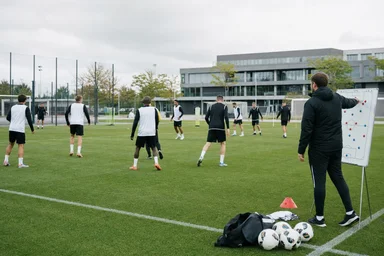
Another practical step is to simulate injury scenarios in training. Coaches can randomly substitute the starting keeper in scrimmages to prepare the defense for sudden changes. This builds adaptability and reduces panic when a real injury occurs. Both France and Senegal reportedly use such drills, which could give them an edge over teams that only train with their first-choice keeper.
What Other Nations Can Learn from France and Senegal
England, for instance, could develop Aaron Ramsdale and Jordan Pickford into a genuine duo. Both have Premier League experience, but they rarely rotate. Brazil’s Alisson and Ederson are underused as a pair; Ederson has only 25 caps despite being arguably the best ball-playing keeper in the world. Smaller federations should prioritize goalkeeper development academies, as Senegal did by partnering with European clubs to send young keepers on loan.
Loaning young keepers to leagues with high shot volume—such as the Belgian or Dutch top flights—can accelerate development. Senegal’s Dieng spent time in Switzerland and Scotland before his breakthrough. France’s Maignan developed at Lille after a loan at Toulouse. This path is replicable.
The 2026 winner may well be the team with the best second-choice keeper. France and Senegal have positioned themselves advantageously. Their approach is not without risk: keeping two elite keepers happy requires careful man-management, and one may eventually demand a move for more playing time. But for now, they enter the tournament with a depth that others lack.
As the tournament unfolds, the impact of this depth will be measured in saves made and goals prevented. While other nations scramble to cover injuries, France and Senegal will simply swap one proven goalkeeper for another. In a competition where margins are razor-thin, that luxury could be the difference between an early exit and a deep run.